
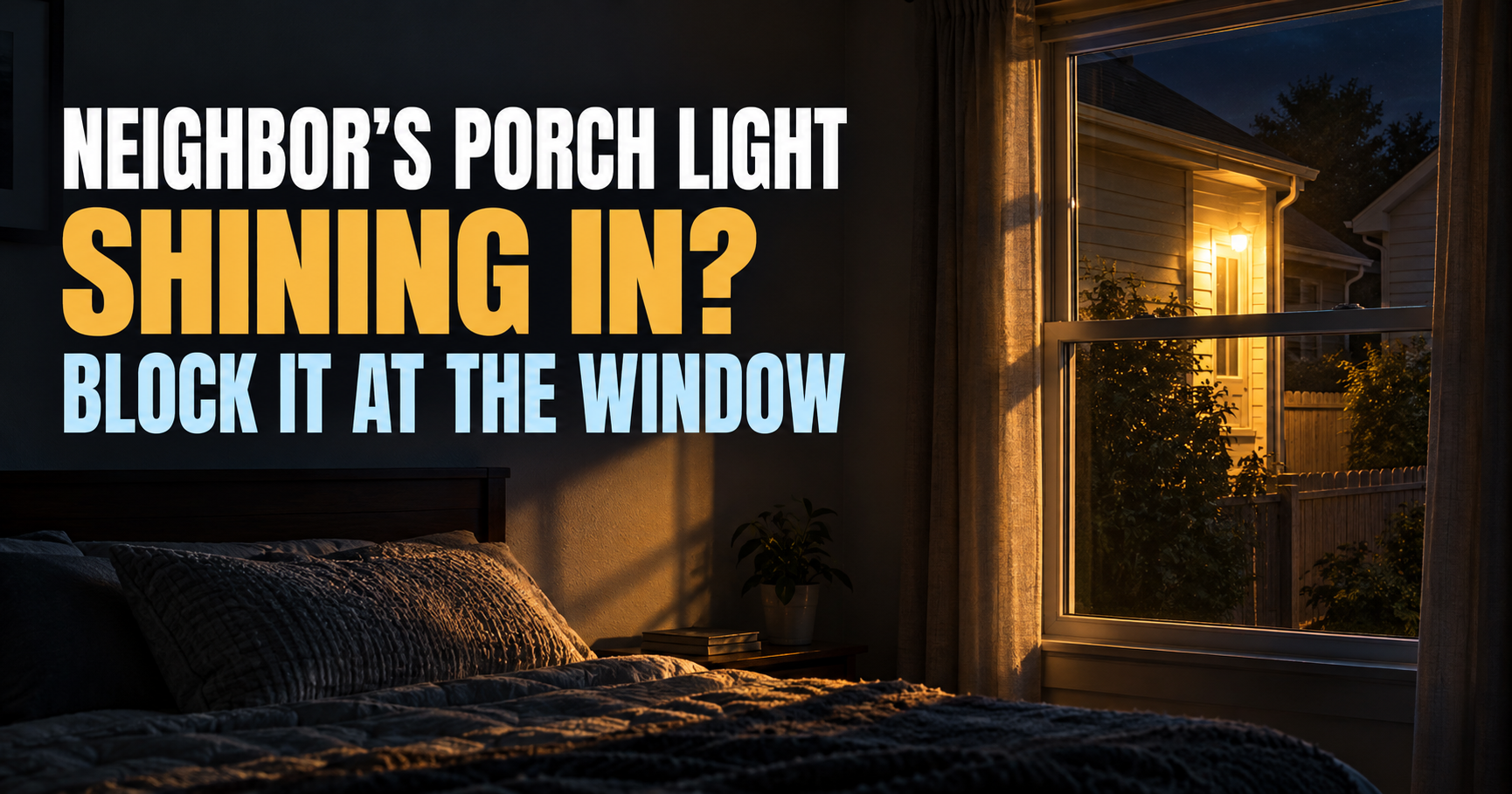
Your neighbor’s porch light clicks on, and suddenly one wall of your bedroom looks like it is still early evening. Maybe it shines through the blinds. Maybe it leaves a bright line beside the curtains. Either way, you are trying to sleep with a light you cannot switch off.
Start by finding exactly where the light reaches your bed. You may be able to block it from your side without changing the whole room or having an awkward conversation. If you do decide to talk to your neighbor, knowing which fixture and which hours cause the problem makes that conversation much easier.
Here is how I would work through it.
First, identify the light you are dealing with
Before moving furniture or buying curtains, I would stand where I sleep and answer three questions:
- Is the light steady or does it switch on and off? A steady porch light creates a different problem from a motion light that flashes across the room several times a night.
- Does it shine directly on the bed? Light on the ceiling or far wall may be less bothersome than a bright patch across your pillow.
- Where does it enter? Look through the curtain fabric, around its edges, through the center opening, and beneath any uncovered blinds.
Check at night while the neighbor’s light is actually on. A window that looks well covered during the day can reveal a very different gap when one bright fixture shines directly toward it.
I would also make sure I had the right source. A streetlight, passing headlights, or your own outdoor fixture can look like the neighbor’s porch light from inside a dark bedroom.


Try the simplest fix from your side
I would change one thing at a time, starting with the spot where the light enters.
1. Close the gap you can see
If there is a bright line along the side of a curtain, pull the fabric toward the wall and see whether it covers the light. If it does, adjusting the rod or how the panel hangs may be enough.
If the glow comes between two panels, check whether they overlap when fully closed. If they barely meet, the curtains may be too narrow for the window.
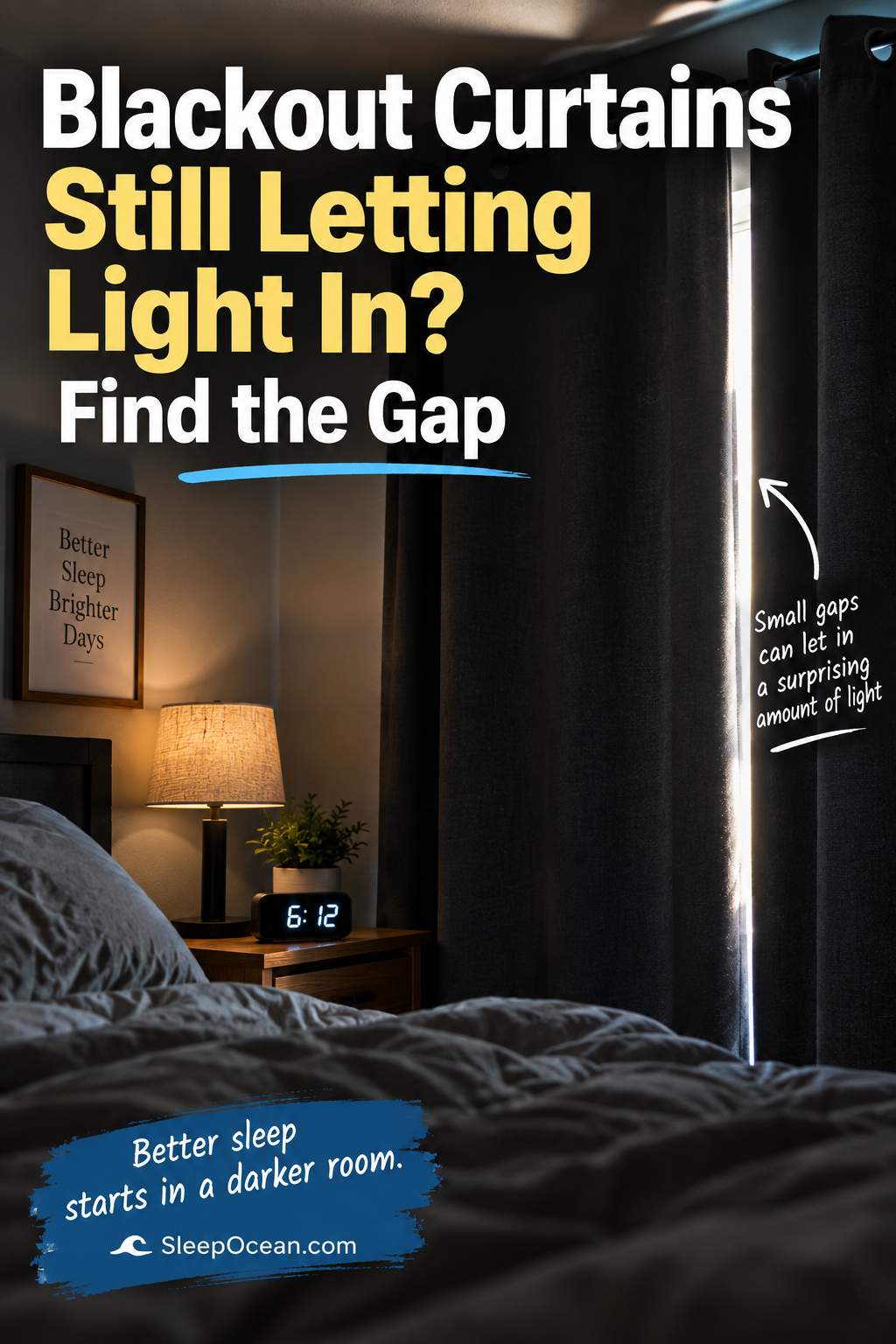
My guide to blackout curtains that still let light in walks through top, side, center, and bottom gaps separately. It is worth checking those before replacing fabric that already blocks light well.
2. Test a temporary window cover
If light comes through the whole uncovered portion of the window, temporarily cover that spot for a night or two. The point is to answer a question: Does blocking this light make the bedroom comfortable enough to sleep in?
Use something secure that will not fall onto the bed or block a window you need to open. A temporary test can tell you whether a more permanent shade or curtain would be worthwhile. If the test works, compare total blackout curtains before choosing a permanent window covering.
3. Move the light out of your sightline
Sometimes you can shift the problem without making the entire room dark. If one fixture shines straight toward your face, changing the bed position or blocking only that sightline may help.
I would consider this when the window covering already works reasonably well and the glare reaches just one sleeping position. Move a pillow to the other side of the bed for a quick test before rearranging heavy furniture.
4. Try a sleep mask if the window cannot be changed
A mask can be useful in a rental, while traveling, or when another person in the room wants the curtains open. It should stay comfortable when you turn over. If you spend the night adjusting it, it has introduced a different sleep problem.
The CDC includes an eye mask as an option when light from traffic or streetlamps is difficult to avoid. It also recommends opaque window coverings when outside light reaches the bedroom.

What if the light turns on every time someone walks past?
A motion light can be more noticeable than a steady glow. The room gets dark, your eyes adjust, and then the window suddenly lights up again.
I would note how often it happens and roughly when. Does it switch on once when your neighbor gets home, or repeatedly through the night? Does wind moving a branch seem to trigger it? Is it actually a passing car lighting the window?
If the flashes are reaching your pillow, block that sightline first. A curtain that looks fine against a dim porch bulb may need better coverage for a powerful motion light aimed toward the window.
I would avoid assuming the light is malfunctioning or that the neighbor knows it shines into your room. They may see only a well-lit walkway from their side.
What if blackout curtains are not enough?
Look closely at where they fail. A curtain panel can block light through its fabric while leaving an opening above the rod, beside the window, or between the panels. A bright outdoor fixture can make those small openings obvious.
If the fabric glows across its entire surface, the panel may simply let more light through than you expected. If the fabric stays dark but the bedroom is bright, look for a gap or a second window.
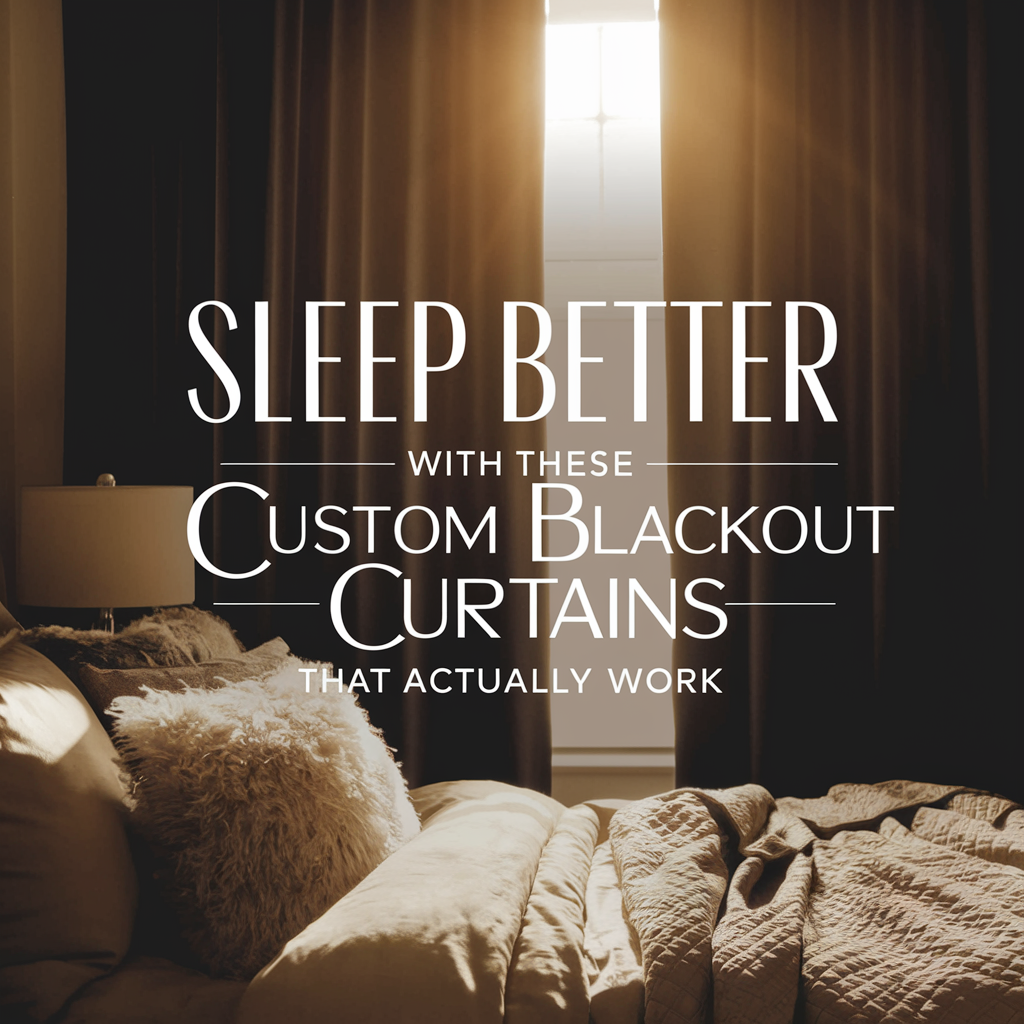
For a buying-focused look at fabric and sizing, see Sleep Ocean’s guide to blackout curtains for sleep. I would identify the failure before ordering a replacement. A more expensive panel hung in the same position can leave the same bright stripe.



Should you ask your neighbor to change the light?
You can, especially if a small adjustment might solve it. I would first confirm the fixture and try an easy fix on my side. Then I would keep the request specific and friendly.
For example:
“Hey, I wanted to mention that the porch light by your side door shines straight into our bedroom window at night. Would you be open to pointing it down a little? I know you need the walkway lit.”
That gives them a clear picture of the problem while recognizing why the light is there. They might be able to change the angle, use a shield, or adjust a motion setting. They might not want to change anything, so I would still have a bedroom fix in mind.
If you rent, it may also help to ask your landlord about a window covering you are allowed to install. I would not start by arguing about brightness measurements or assuming the neighbor is doing it on purpose.
How to tell whether the light is really waking you
It is easy to notice a bright window after you wake and assume it woke you. Sometimes that is true. Sometimes a sound or temperature change woke you first, and the light simply made it hard to fall back asleep. That distinction also matters with sunlight waking you early, since daylight may make it harder to return to sleep even when something else caused the initial wake-up.
For several nights, I would note:
- When I first remember waking.
- Whether the room was already bright.
- Whether I noticed a sound, heat, or another disturbance first.
- Whether I could fall back asleep after the light went off or was blocked.
Then I would block the light for a few nights while keeping the rest of the routine fairly similar. If the wake-ups improve, that is a useful lead. If they do not, I would look beyond the window.
Outdoor nighttime light has been associated with differences in sleep in research, but that does not tell us what caused one person’s wake-up on a particular night. Your own bedroom test is more useful for deciding what to fix next.
What if you work nights and sleep during the day?
Then the porch light may be the small part of a larger window problem. You need the covering to handle daylight too.
I would check the room at the brightest time you normally sleep. If sunlight comes through the material, address the fabric or add an opaque layer. If light comes around the edges, focus on fit and placement. The CDC specifically recommends more opaque window coverings for people who sleep during the day.
Do not judge the setup only by how dark it looks at bedtime. The light conditions need to work during your sleep hours.
What if you need some light for your own safety?
You can block a neighbor’s glare and still keep a safe route to the bathroom. I would separate those two jobs: cover the bright window, then use a small light where I actually need to walk. The same approach used for low-light nighttime bathroom trips can help you reach the bathroom without fully waking yourself.
A dim light near the floor may serve that purpose without shining across the bed. Keep the path clear rather than relying on a powerful hallway or bedroom light. The CDC suggests a dim red night light for getting up at night.
If you are also wondering about lamps, TVs, or other light inside the room, my article on sleeping with the lights oncovers those separately.
Questions that come up with a neighbor’s light
Can a porch light bother my sleep if my eyes are closed?
It can still brighten the room, and light is one of the cues involved in the body’s sleep and wake timing. But I would be careful about claiming that one porch light is the definite cause of every poor night. Check whether it reaches the bed and whether blocking it changes your sleep.
Should I use blinds or curtains?
Use whichever setup blocks the light at the point where it enters. Blinds may leave gaps between the slats or around the edges. Curtains can leave gaps above the rod or beside the panels. In some rooms, a shade close to the window plus a curtain over it works better than either one alone. For a more permanent curtain solution, a ChrisDowa blackout panel may be worth considering when the existing covering leaves gaps.
What if the light only bothers one side of the bed?
That is a good reason to test the sightline before treating the entire window. Lie on both sides and notice where the glare falls. A small adjustment to the covering or bed position may solve the problem for the person it affects.
What if I cannot change the window because I rent?
Start with options you can remove, such as a comfortable sleep mask or a covering your lease allows. Test the setup at night with the problem light on. If you want to install hardware, ask about it before drilling.
What if I block the light and still wake up?
I would take that result seriously instead of buying another curtain. Listen for outside noise, check whether the room gets warmer overnight, and notice whether you were waking before the porch light came on. If sleep problems continue or affect your days, discuss them with a healthcare professional.
The order I would follow tonight
- Stand at the pillow with the neighbor’s light on. Identify the fixture and the exact opening where its light enters.
- Block that one opening temporarily. Check the room again from the bed, since a fix that looks good at the window may still leave glare on the pillow.
- Sleep with the change for a few nights. Note whether you wake less often or find it easier to fall back asleep.
- Make the fix permanent if it helps. Adjust the curtain, add a suitable shade, or talk with your neighbor if changing the fixture would solve a problem you cannot reasonably block.
You do not have to choose between putting up with a bright bedroom and confronting the neighbor tonight. Find the light’s path first. Once you can point to the exact problem, the next step becomes much easier.
About the author: Nora Whitcomb writes practical sleep guides for Sleep Ocean, focusing on the bedroom details readers can check for themselves before spending money or assuming one change will fix every night.
As an Amazon Associate we earn from qualifying purchases through some links in our articles.