
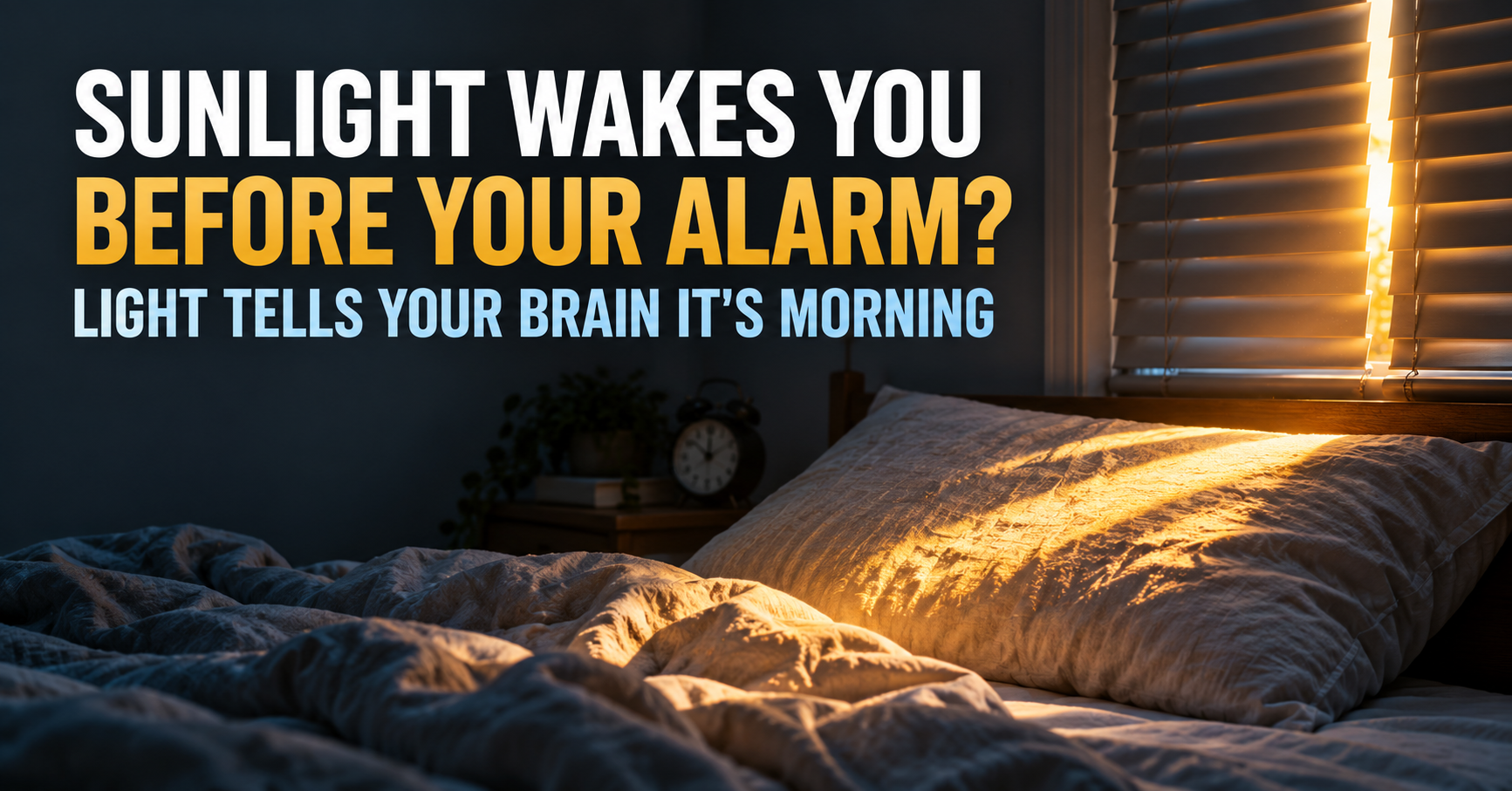
You set your alarm for 7:00, but the sun starts lighting up your bedroom at 5:45. Now you are awake, annoyed, and wondering whether that strip of light across the pillow really woke you or whether you would have gotten up early anyway.
Yes, morning sunlight can wake you before your alarm. Light is one of the signals your body uses to time sleep and wakefulness. But I would check the pattern before blaming the window. An early wake-up can also come from noise, temperature, an earlier bedtime, or a sleep problem that has nothing to do with the sun.
Here is how I would figure out which one I was dealing with, starting with the bedroom rather than buying something.
First, check whether your wake-up follows the light
The most useful clue is when the problem happens. If you wake earlier as sunrise moves earlier in spring, sleep later on overcast mornings, or wake when a bright patch reaches your face, the window deserves a closer look. Those patterns do not prove sunlight is the only cause, but they give you something specific to test.
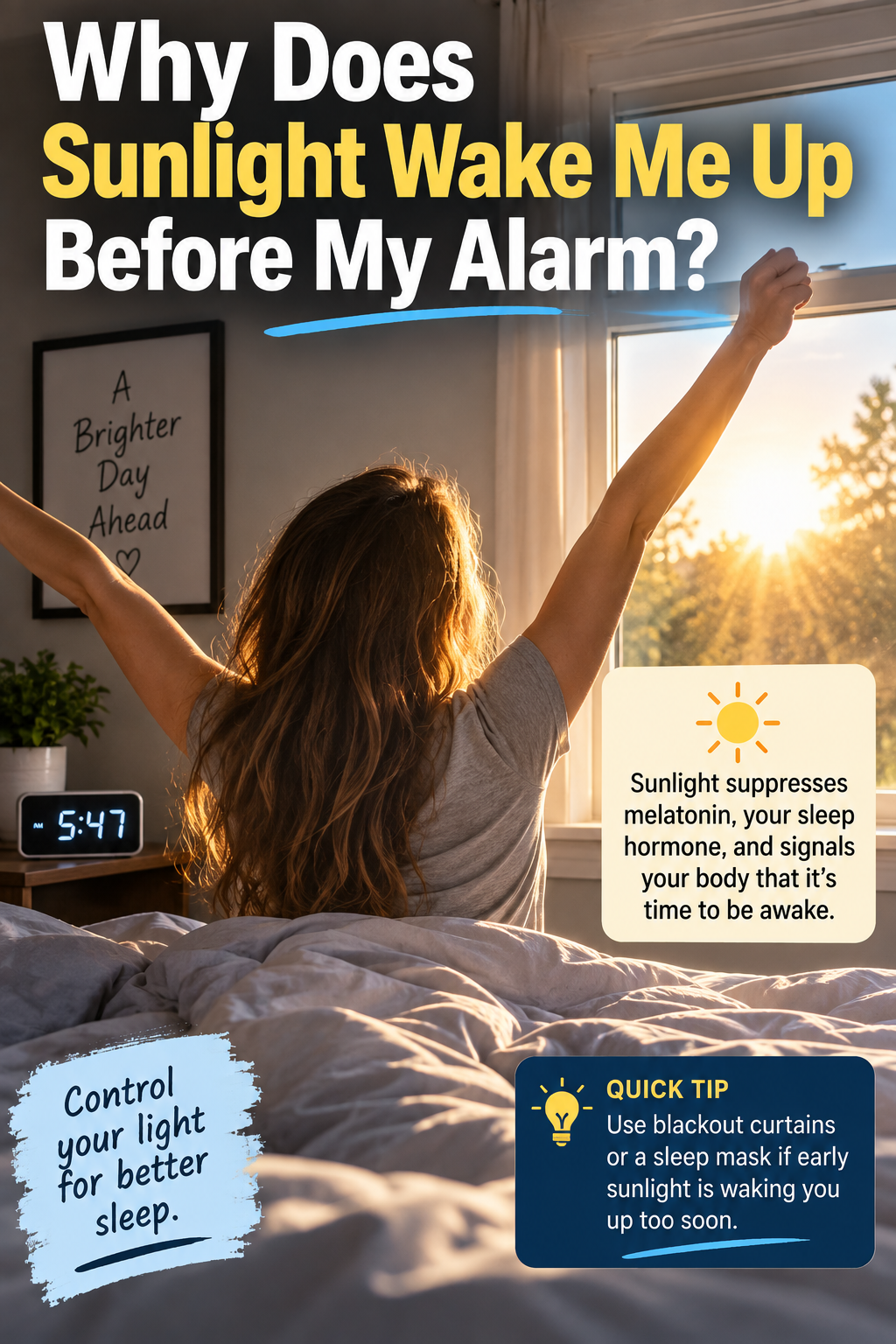
The CDC has noted that longer daylight hours can bring sunlight into a bedroom earlier and result in an earlier wake time. Light also helps set the body’s daily sleep and wake rhythm.
For the next few mornings, I would jot down the time I first woke, whether the room was already bright, and whether something else woke me first. I would also note my bedtime. Waking at 6:00 after going to sleep at 9:00 is a different situation from waking at 6:00 after falling asleep at midnight.
You do not need a sleep app to do this. A short note on your phone later in the morning is enough. The goal is to see whether daylight and the unwanted wake-up consistently arrive together.


Find the light that actually reaches your bed
A room can look dark when you turn the lights off at night and become bright from one small gap in the morning. I would inspect it at the time I usually wake too early, since a nighttime check will miss that problem.
Lie where you normally sleep and look toward the window. Is the light coming through the curtain fabric, over the top, between two panels, or around the side closest to your pillow? Does it reflect off a mirror or pale wall? Does an open doorway let daylight in from another room?
That last detail is easy to overlook. You might have excellent bedroom curtains, but a bright bathroom window and an open door can still light the bed.
I would fix the specific gap first. If the fabric blocks light but sunlight pours around its edges, buying another curtain made of the same fabric may change very little. Try adjusting the panels so they overlap, extending them beyond the window, or closing the door that lets light in from elsewhere.
If the whole curtain glows as soon as the sun rises, the material itself may be too thin. That is when a room-darkening shade or more opaque covering makes sense. CDC guidance recommends blocking light around the edges of window coverings and notes that ordinary blinds can let too much through. If this is happening in a child’s room, blackout curtain options covers blackout curtain options for early waking.
For help with the broader bedroom setup, I covered what to look for when sleeping with the lights on. Morning sun deserves its own check because the room can change so much between bedtime and dawn.



Test a darker morning before spending money
If you suspect the window, I would try a reversible fix for several mornings. Make the room noticeably darker at the time the sun normally wakes you, while keeping the room safe to move through.
You might already own a sleep mask that fits comfortably. You might be able to temporarily cover a window gap or move the bed so the first light does not fall across your face. If you share the room, choose a change that works for the other person too.
Then compare mornings. Did you sleep until closer to your alarm? Did you wake at the same time in a dark room? Did you wake later but still feel tired? Each answer tells you something.
One good morning is encouraging, but I would not call it proof. Give the change a few days, since sleep varies even when the bedroom stays the same. If the darker room consistently buys you more sleep, you have a reason to make the fix permanent.
If the window is the problem and you are considering a longer-lasting option, read my experience-focused guide to blackout curtains for sleep. I would still measure and inspect the light gaps before ordering anything.
What if you wake before sunrise?
That is an important distinction. If you are fully awake while the bedroom is still dark, sunlight did not trigger that particular wake-up. Dawn might make it harder to fall back asleep afterward, but something else woke you first.
I would think back to what happened just before I opened my eyes. Was there a delivery truck outside? Did the heat turn on? Was the room suddenly warm? Did I need the bathroom? Was I already thinking about the day?
You may not know every time. That is normal. But if you repeatedly wake at the same early hour before there is any light, changing the curtains alone is unlikely to answer the whole question.

Sleep Ocean already has a broader guide to waking up at 3 a.m. if your wake-up happens well before dawn. For this article, the useful dividing line is simple: was the room bright before you woke, or did you notice the light only after you were awake?


Could you simply be going to bed too early?
Possibly. If you regularly fall asleep very early in the evening and wake early feeling rested, the timing of your sleep may be shifting earlier. In that case, the sun might coincide with your natural wake time rather than cause it.
I would look at the whole night, not just the clock at dawn. About how long were you asleep? Do you feel rested through the day? Is the early wake-up new, or have you always tended to wake at that hour?
I would also avoid trying to solve an early wake-up by automatically staying up much later. If you still wake at the same time, you have only shortened your sleep. First find out whether morning light is reaching you and whether blocking it changes anything.
What if you need daylight to help you wake on workdays?
Then I would keep the choice intentional. Morning light can be helpful when you want to wake earlier. The CDC even discusses increasing bedroom light before a desired early wake time as a way to help people adjust to an early schedule.
But sunlight arriving at 5:30 is not very helpful if your alarm is set for 7:00 and you need that remaining sleep. You could keep the room dark until your planned wake time, then open the curtains or get outside once you are up.
That distinction matters for weekends too. If you keep one curtain partly open because you like waking with the sun on weekdays, notice whether it wakes you too early on days you hoped to sleep longer. You do not have to use the same window setup every night.
What if the room is dark and you still wake too early?
I would stop treating the window as the main suspect. Notice whether the bedroom becomes too hot toward morning, whether a fan shuts off, or whether a neighbor’s routine starts around the same time each day. Temperature and noise can be easier to miss than sunlight because you may notice them only after you are awake. If temperature changes appear to coincide with waking, a WiFi thermostat may help you monitor and adjust the room more deliberately.
Morning wake-ups can also be affected by caffeine, alcohol, worries, pain, and other symptoms. CDC guidance specifically cautions that waking too early can have causes beyond the bedroom light.
If the room gets uncomfortable overnight, Sleep Ocean’s article about bedroom temperature swings is a more useful next stop than another curtain search.
When early waking keeps happening, leaves you short on sleep, or affects how you function during the day, tell a healthcare professional what you have noticed. Bring the rough wake times and the results of your darker-room test. That gives the conversation more to work with than “I just keep waking up early.”
The morning-light check I would do tonight
Before bed, choose the window or doorway you suspect. In the morning, look at the room before opening your curtains or turning on a light. Note whether sunlight is reaching your pillow and whether you were already awake when you noticed it.
Then make one change that darkens that spot for the next few mornings. If your wake time moves closer to your alarm, you have found a practical lead. If it does not, move on to the other clues instead of assuming you need more sleep products.
The question is not whether sunlight can wake someone. It can. The question that helps you is whether it is reaching your bed before you want to wake, and whether removing that light changes your morning.
About the author: Nora Whitcomb writes practical guides for Sleep Ocean, helping readers check the details of their own sleep environment and make useful changes without promising that one trick will fix every night.
As an Amazon Associate we earn from qualifying purchases through some links in our articles.