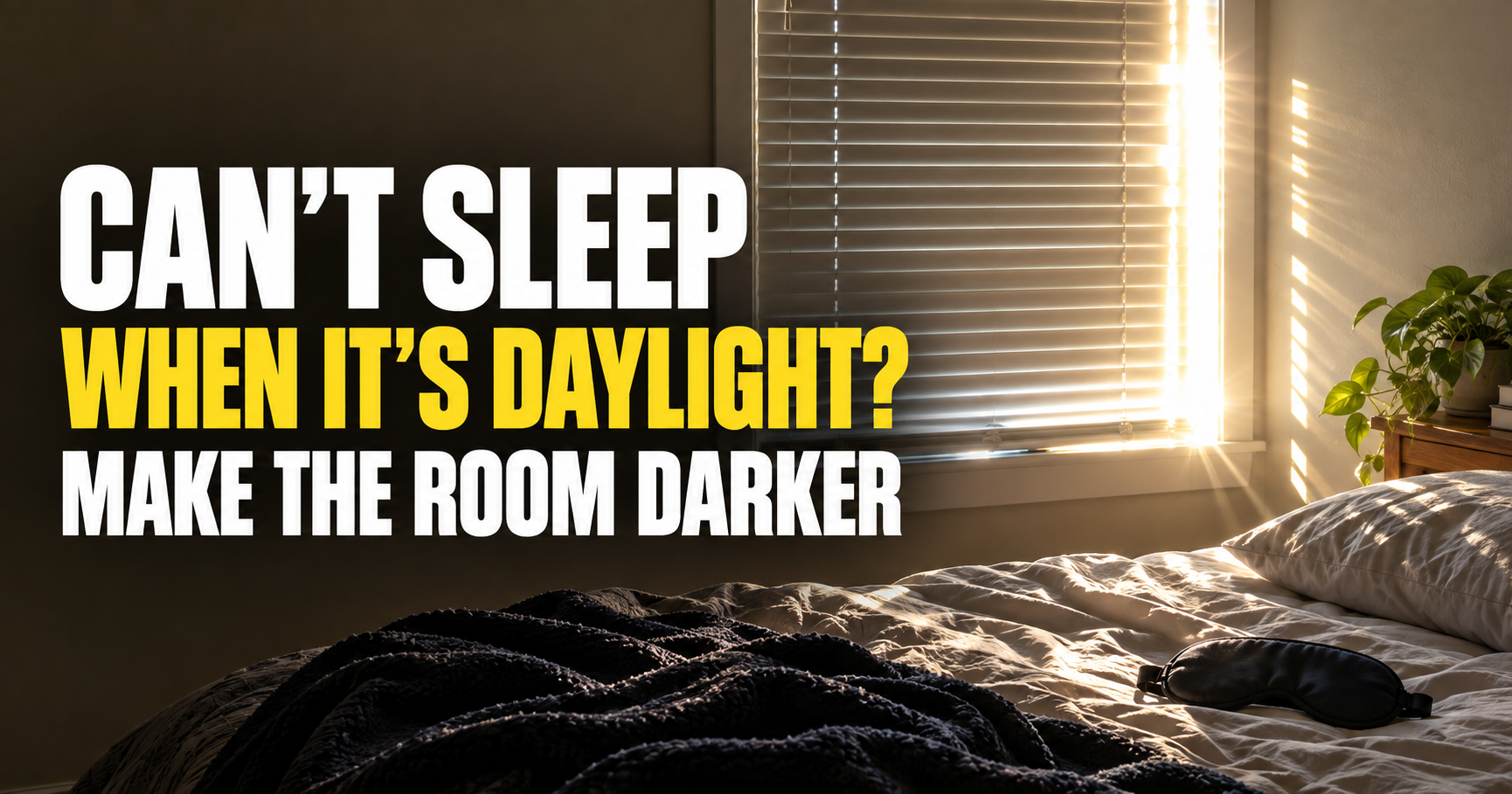
It is 8 a.m. You have been awake all night, and your bedroom looks like noon. You close the curtains, climb into bed, and notice sunlight around every edge of the window. Then someone starts mowing outside.
If you need to sleep during the day, work on the room and the hours around your sleep. Darkness matters, but a dark bedroom will not help much if noise, phone calls, heat, or an errand cuts your available sleep time in half.
I would tackle this in order: protect the time, block the light that reaches the bed, then find the next thing waking me.
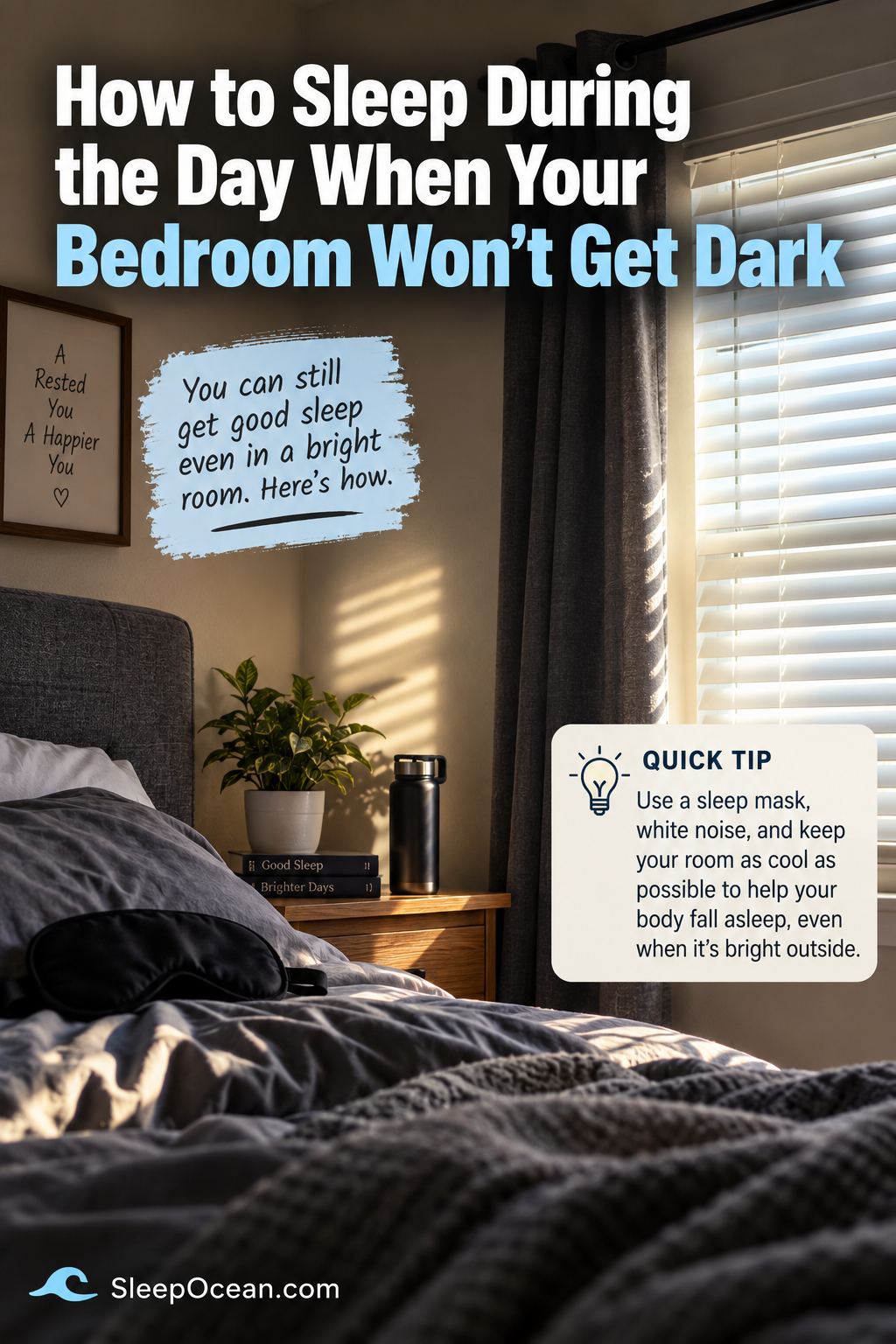
Protect your sleep time before fixing the window
A night shift can make sleep feel like something you squeeze between the rest of the day’s tasks. That is a hard way to get enough of it.
If I were coming home after working all night, I would decide when I intended to sleep before I got home. I would handle only what could not wait, then head to bed. Grocery shopping, laundry, and a quick stop that turns into an hour can take away the part of the day when sleep might come most easily.
CDC guidance for night shift workers recommends going to bed soon after arriving home and protecting the morning hours for sleep. It also notes that night shift workers often get less sleep than people working days.
That advice is especially useful if you keep telling yourself you will sleep after getting a few things done. The errands may still be there when you wake. The chance to sleep may not be.

Check the bedroom at the time you actually use it
Do not judge the room at night. Close the curtains at the same time you usually go to bed, then lie where your head normally rests.
Look for these five sources:
- Light through the curtain fabric. If the whole panel glows, the material may be too thin for daytime sleep.
- A bright outline around the window. Light may be coming over the rod or around the sides.
- A stripe between curtain panels. Panels that just touch may separate or leave a visible center gap.
- Light beneath the bedroom door. The window may be covered while the hallway lights the room.
- Light from another window. A bathroom, closet, or second bedroom window can brighten the bed through an open door.
Stand at the pillow again after you make a change. A fix that looks good from beside the window may still leave sunlight across your face.
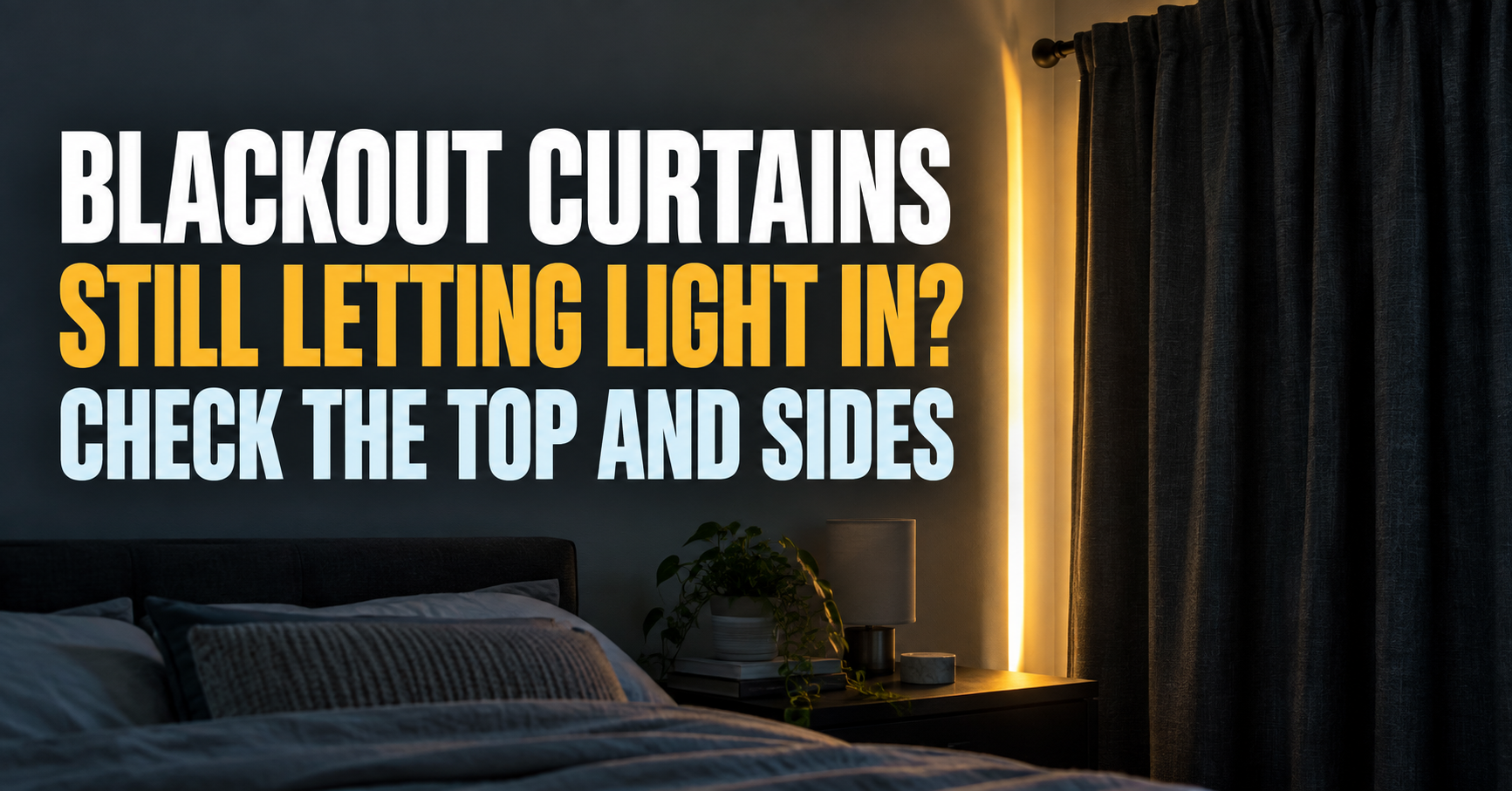
If the curtain fabric stays dark but the edges shine, my blackout curtain gap guide shows how to narrow down the top, sides, center, and bottom.
Make the room darker without buying everything at once
I would test the most obvious leak first. Cover it temporarily for one sleep period and see how much the room changes.
If sunlight comes through the fabric, try an opaque layer or a different covering. If it comes around the sides, check whether the curtain can extend farther beyond the window. If it comes under the door, see whether closing another door reduces the hallway light.
The CDC recommends a very dark room for people sleeping during the day. Its guidance also calls out windows, doorways, and the route to the bathroom, which explains why covering only the main window may leave the room brighter than expected.
A sleep mask can help if you rent, share a room, or cannot change the window right away. Make sure it remains comfortable when you turn over. I would still block a glaring window if I could, since the mask may slip before my planned wake time.
Look for the light that reaches you later
A room that is dark at 8 a.m. may not stay that way. As the sun moves, a gap that did not matter when you got into bed may shine directly on your pillow at noon.
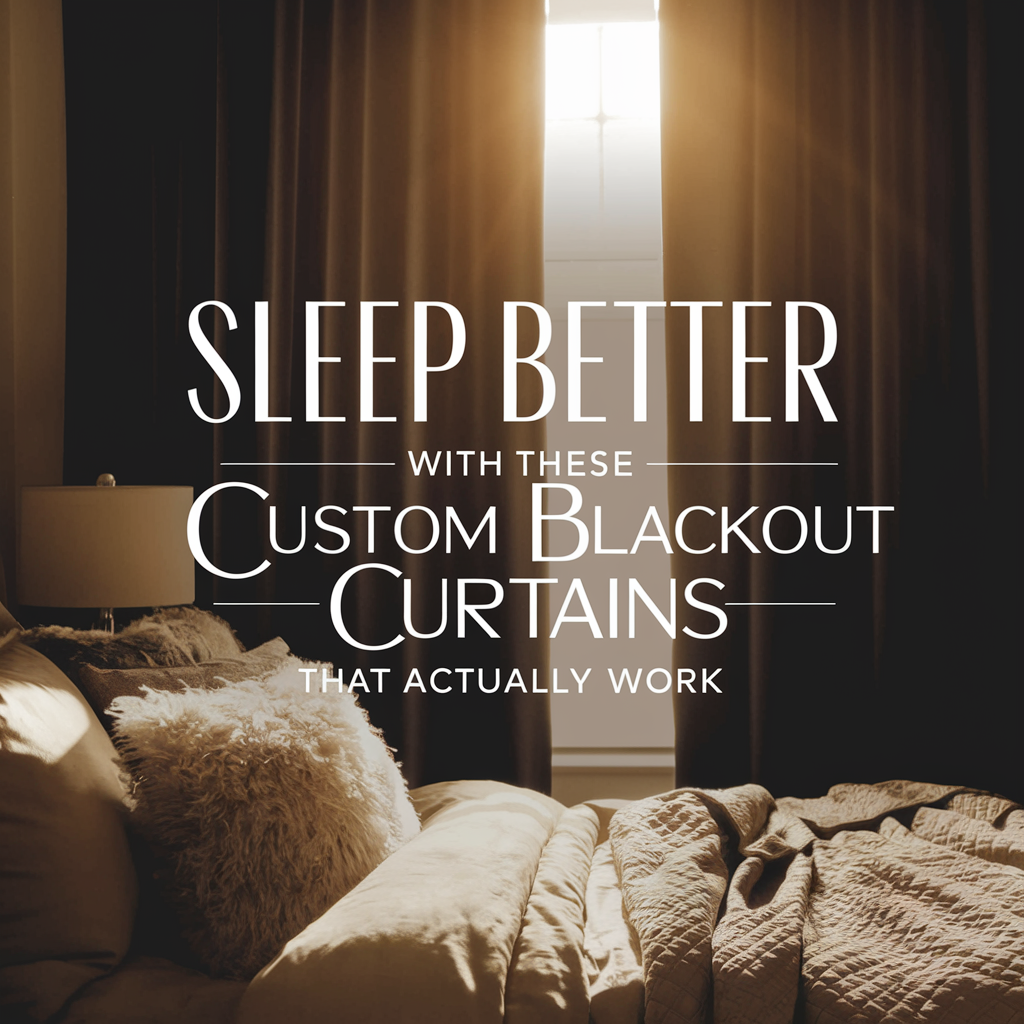
Before buying new curtains, I would check the room at two times: If the test shows that the window covering itself is the weak point, ChrisDowa blackout curtains in your custom size may be one option to investigate.
- When I first lie down.
- Around the time I keep waking earlier than planned.
That second check may reveal the real problem. You can cover one side perfectly and still have midday sun enter from a different angle.
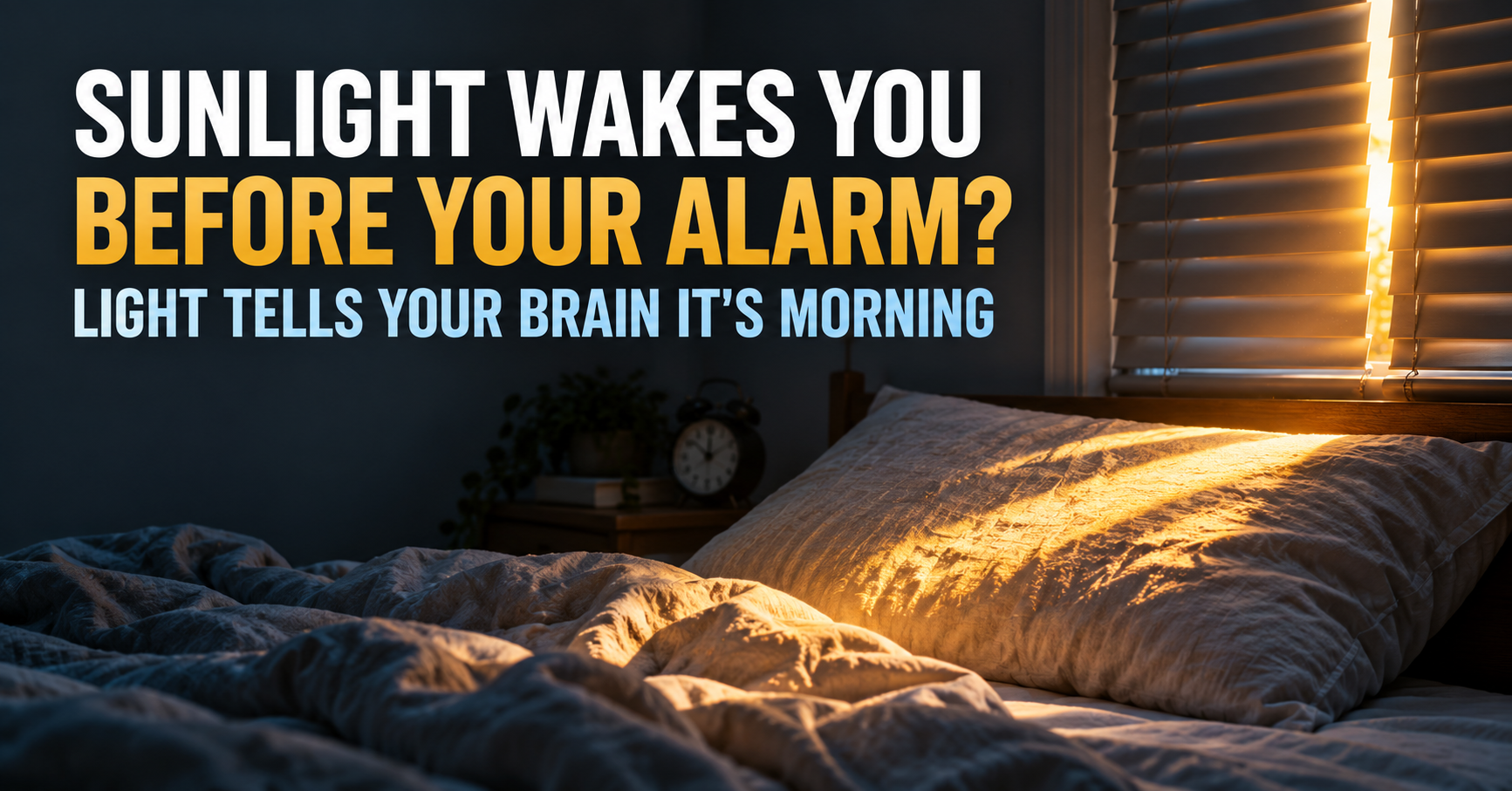
If your issue is waking when daylight reaches the bed, my article on sunlight waking you before your alarm explains how to test that pattern. The same idea applies even if your “morning” starts in the afternoon.



Make the room quiet enough to stay asleep
Daytime comes with sounds that nighttime sleepers may rarely deal with: deliveries, traffic, lawn equipment, people talking, and household chores.
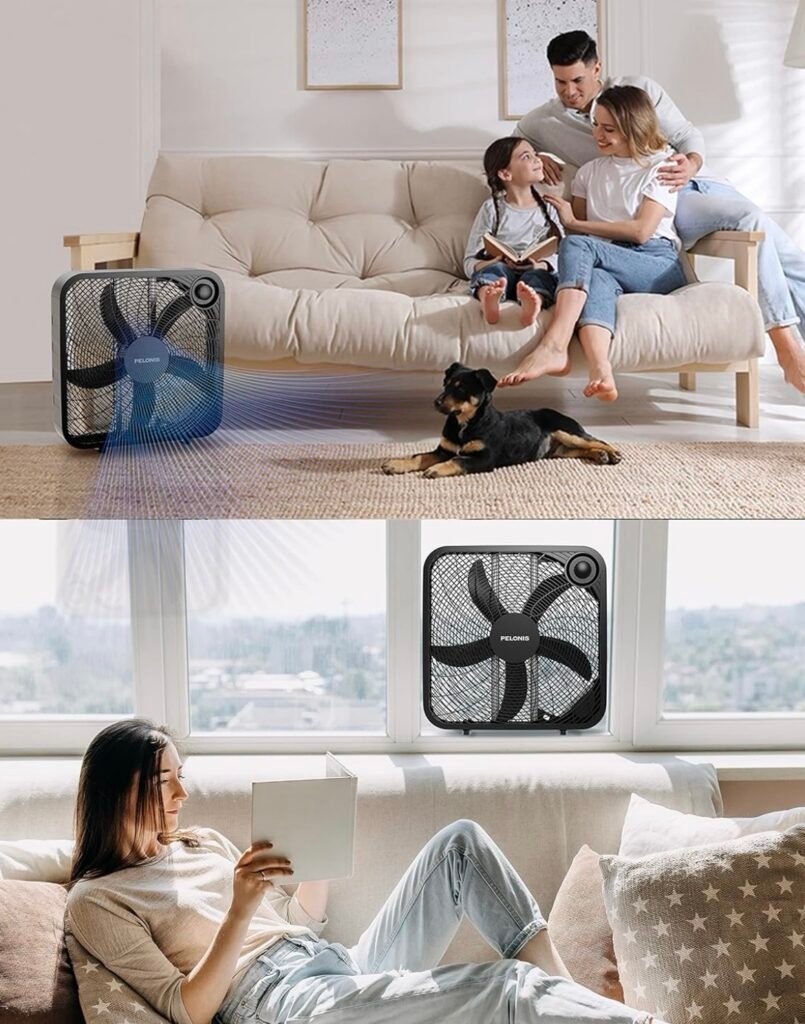
I would first ask whether the noise is steady or sudden. A steady hum might fade into the background. A door slamming or a phone ringing can wake you even in a perfectly dark room. For steady background noise, a box fan for sleeping noise may be worth considering after addressing sudden interruptions.
Try the simplest appropriate change:
- Silence calls and alerts that can wait. Keep any emergency contacts able to reach you if your phone allows it.
- Tell people at home when you are sleeping. A specific window of time is more useful than saying you are “trying to rest.”
- Check where the sound enters. A bedroom away from the street may be quieter than the room you normally use.
- Try earplugs or steady background sound if they work for you. Keep any alarm or safety signal you need audible.
The CDC includes reducing noise, preventing phone interruptions, and getting cooperation from family as parts of protecting daytime sleep.
If you like background sound, Sleep Ocean has sleep sounds you can try. Keep the screen from lighting the room while the sound plays.
Pay attention to afternoon heat
Sunlight through a window can brighten a room and warm it. If you fall asleep comfortably and wake sweaty a few hours later, check the temperature when you wake, not only when you go to bed.

I would look for a pattern: Does the room get uncomfortable as the sun hits one window? Does the air conditioner cycle off while the room still feels warm? Is the bedding comfortable at 8 a.m. but too heavy by noon? If heavy bedding is part of the problem, a breathable blanket for hot sleepers could be one change to consider alongside improving the room temperature.
A dark window covering may help with some direct sun, but it cannot fix every temperature problem. Sleep Ocean’s guide to bedroom temperature swings is a better next step if warmth, rather than brightness, is what seems to wake you.
Make your sleep hours clear to other people
When you sleep during the day, other people may see you at home and assume you are available. It helps to be specific.
I would tell the people who need to know, “I’ll be asleep from about 8:30 a.m. until 3:30 p.m. Please call only if it cannot wait.” If you live with others, talk about the sounds that actually reach your room. A quiet conversation downstairs may be fine while a door beside the bedroom is not.
This is not about demanding that an entire household stay silent all day. It is about protecting a reasonable period of sleep in a house that continues to function.
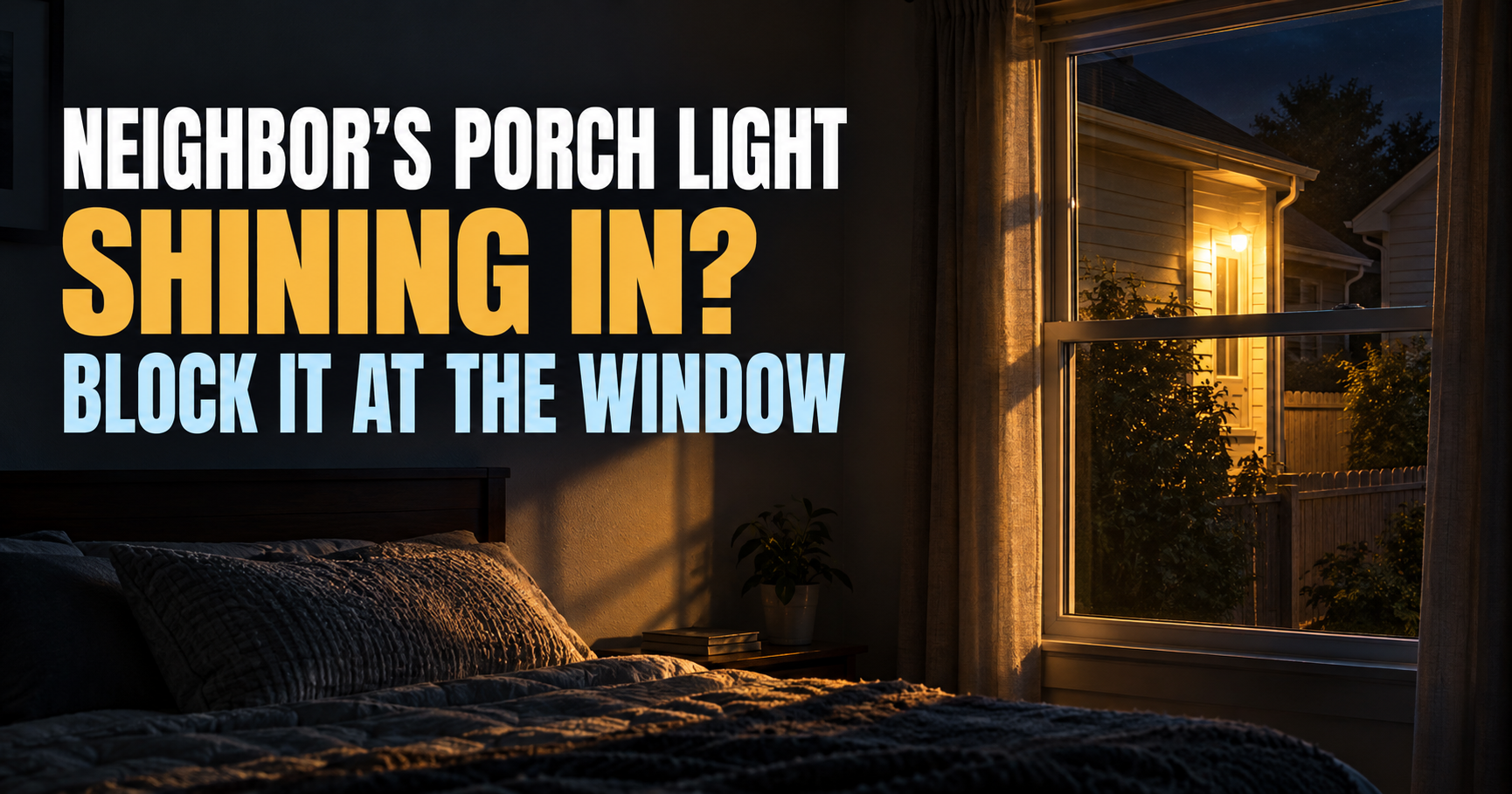
If a neighbor’s outdoor light also reaches your window during your sleep hours, the steps in my neighbor’s porch light guide can help you trace and block it.
Watch what you do before going to bed
After an overnight shift, it can be tempting to drink another coffee to get through the drive home or stay awake for an errand. That may make sleeping when you finally get home harder.
NIH guidance suggests shift workers limit caffeine to the first part of their shift. It also recommends giving yourself enough time to sleep and removing light and sound distractions from the daytime bedroom.
I would look at timing rather than making a rule about one exact cutoff hour for everyone. When was my last caffeinated drink? When did I try to sleep? If I keep lying awake after getting home, that is one detail worth tracking.
I would also avoid making the trip home longer than necessary. Bright morning light and a growing list of errands can make it harder to protect the sleep period I planned. If you are very sleepy after a shift, prioritize getting home safely and seek advice tailored to your schedule rather than improvising a risky driving routine.

What if you sleep for a few hours and cannot get back to sleep?
First, look at the reason you woke. Was there sunlight on the pillow? Did someone call? Did the room warm up? Did you need the bathroom?
A pattern gives you a practical next step. If a delivery wakes you at the same time each day, focus on sound and household interruptions. If you wake as one window brightens, fix that window. If you wake in a dark, quiet, comfortable room, the setup may no longer be the main issue.
I would also check how much time I had actually set aside for sleep. If I went to bed at 9 a.m. and scheduled an appointment for 1 p.m., my room could be perfect and I would still have a short sleep opportunity.
Can I use a night light when I sleep during the day?
Yes, if you need one to get up safely. Keep the path clear and use only as much light as you need. NIH guidance says a dim night light is fine if needed, even while recommending a cool, quiet, dark bedroom.
Will blackout curtains alone fix daytime sleep?
They can remove a major source of light. They will not silence a phone, stop someone knocking, cool an overheated room, or create enough time between shifts. I would treat them as one part of the setup.
What if I cannot install curtains in my rental?
Start with what your lease allows and test the idea before purchasing anything. A comfortable mask may help in the meantime. Check whether a removable covering can safely block the problem window, and ask before installing hardware.
When should I get help with daytime sleep?
If you still cannot sleep during the day or cannot adjust to your work schedule after protecting your sleep time and improving the room, talk with a healthcare professional. NIH specifically recommends discussing persistent difficulty sleeping during the day or adapting to shift work with a doctor.
A practical setup for your next sleep period
I would make these changes in this order:
- Reserve enough time for sleep before agreeing to errands or appointments.
- Check the room in daylight from the pillow, not just from the doorway.
- Block the brightest leak, then check again later in the day when the sun has moved.
- Silence avoidable interruptions while keeping necessary emergency contact and alarms available.
- Check the temperature when you wake, especially if the room gets afternoon sun.
- Write down what woke you for a few sleep periods before changing more things.
That last step matters. If you know whether the problem is a noon sunbeam, a ringing phone, or an overheated room, you can spend your effort on the thing that actually interrupts your sleep.
About the author: Nora Whitcomb writes practical sleep guides for Sleep Ocean, focusing on the details people can check in their own rooms and routines when standard bedtime advice does not fit their schedule.
As an Amazon Associate we earn from qualifying purchases through some links in our articles.