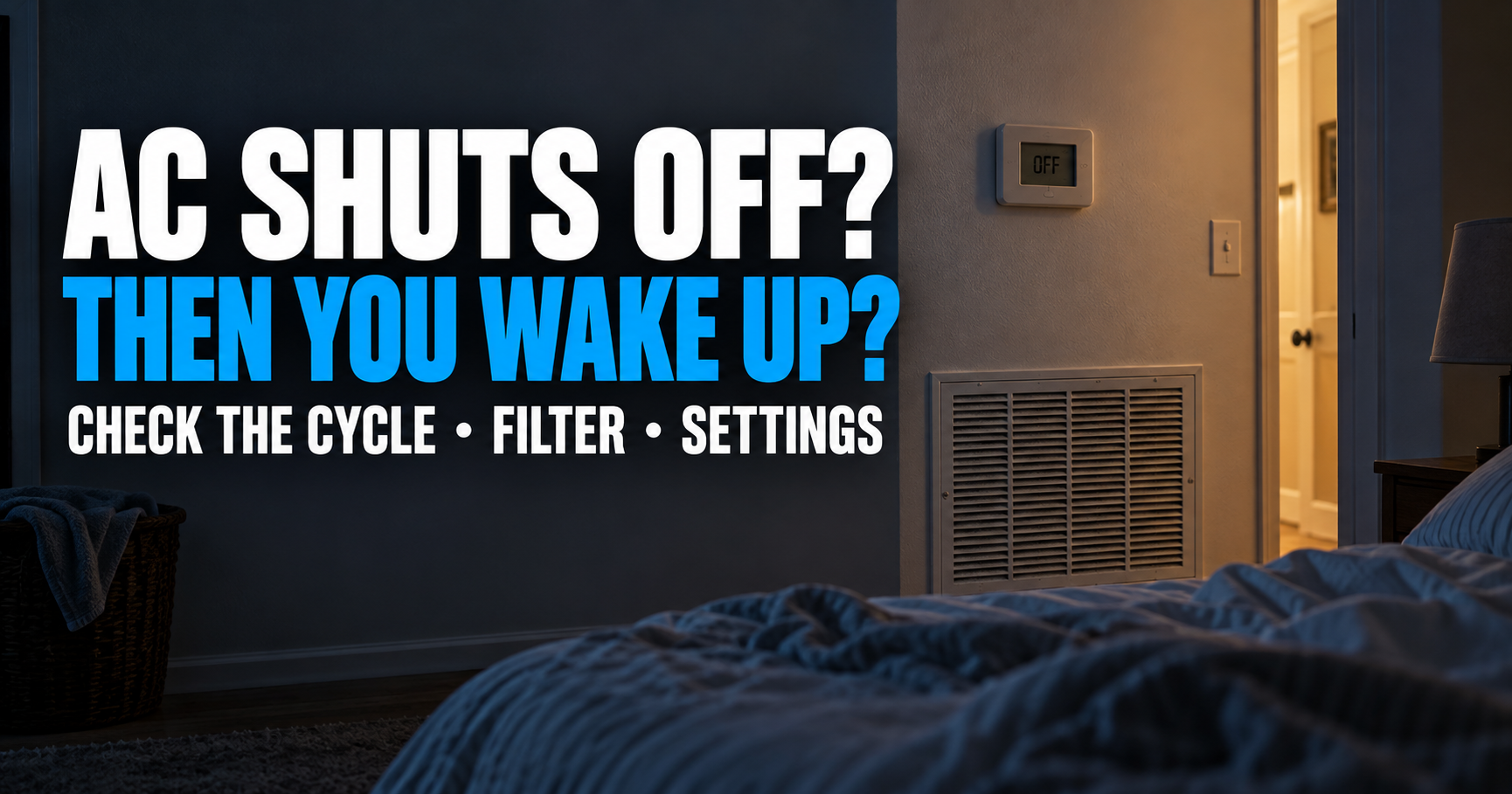
The air conditioner stops, the bedroom goes quiet, and you wake up. You turn over, hear it start again later, and wonder why a normal cooling cycle keeps interrupting your night.
The AC turning off changes more than the temperature. The sound stops. The airflow may stop. Your bedroom may begin to warm up. If you can tell which change you notice first, you have a much better chance of fixing the right problem.
I would start with the timing. Do you wake the moment the AC stops, or do you wake later, after the room has had time to get uncomfortable?
The quickest way to narrow it down
When you wake, notice the first thing that bothers you:
- The sudden quiet: The AC may have been covering another sound.
- The loss of moving air: The room may still be cool, but it feels stuffy without airflow.
- Heat or dampness: Your bedroom may warm up or feel humid between cooling cycles.
- A click, rattle, or bang: A sound from the system may be waking you as it shuts down.
- A different setting on the thermostat: A schedule may change your cooling target while you sleep.
Try to observe the pattern before changing several settings. If you adjust the thermostat, bedding, fan, and AC mode on the same night, you will not know which change helped.

If you wake the instant the AC goes quiet
Sound is the first thing I would investigate. An air conditioner can provide a steady background hum. Once it stops, you may suddenly hear traffic, another person in the house, or a dog outside.
The CDC describes a fan or white noise machine as a way to cover other sounds in a bedroom. That does not mean constant noise is necessary for everyone. It means the AC might have been masking something you only hear after it shuts off.
Listen for what becomes audible in the quiet. Is there a specific noise, or does the silence itself feel unfamiliar? That distinction will guide your test.
For one night, you could try a separate, steady sound at a comfortable volume while leaving the AC on its usual setting. Keep any screen dark and avoid audio with ads or abrupt changes. If you no longer wake as the cooling system stops, sound becomes a stronger possibility.
If you prefer an actual fan, my guide to waking when a fan turns off explains why a steady sound, breeze, and temperature can become tangled together.
If you miss the airflow
Many central systems stop blowing air when the cooling cycle ends. The bedroom can feel still immediately, even though the room temperature has not risen much yet.
I would ask whether I need cooler air or simply moving air. A small room fan running at a comfortable setting can help test the difference. If the room feels fine while the AC is off and another fan continues moving air, airflow may be the main issue.
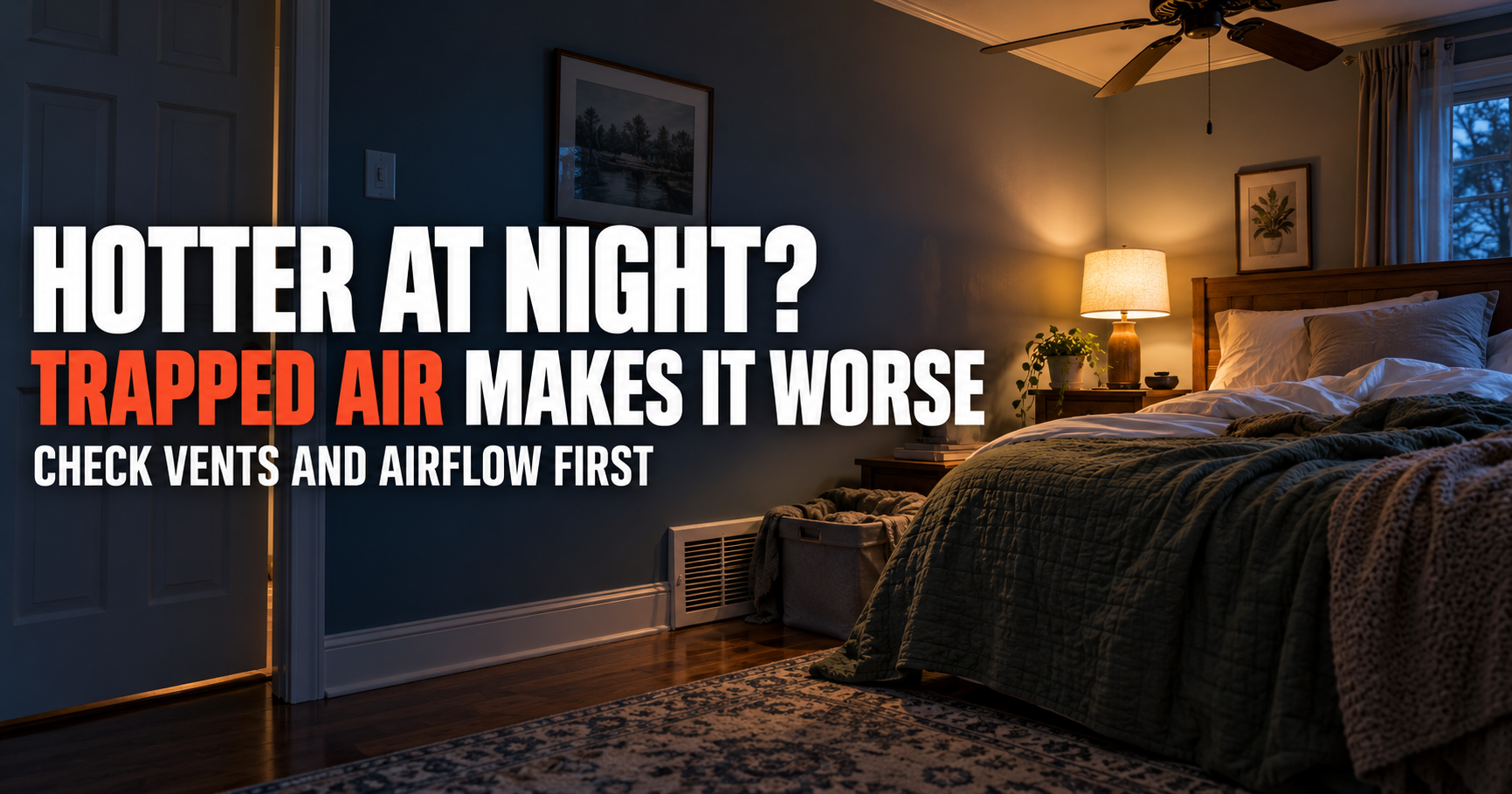
Check where the AC vent is, too. If cold air blows directly over the bed while the system runs, the change when it stops may feel dramatic. You may be going from a strong draft to no draft, rather than from a cool room to a hot one.
Do not close every vent or make major HVAC changes to force more air into the bedroom. For this first check, I would simply note the pattern and use a separate fan if that is appropriate for the room.
If you wake hot later in the cycle
A delayed wake-up points me toward the room itself. The thermostat may say the house has reached its target while the bedroom remains warmer, or the bedroom may heat up between cycles.

Place a simple room thermometer near the bed, away from direct sun, vents, and lamps. Compare what it reads at bedtime with what it reads when you wake. You are looking for a change in your actual sleeping space, not only the number shown on a thermostat down the hall. An indoor thermometer and humidity monitor can help you record the bedroom conditions rather than relying only on the hallway thermostat.
Also check whether the bed is warmer than the room. A thick comforter or bedding that traps heat can make you uncomfortable even when the bedroom air feels reasonable.
The CDC recommends a bedroom that is cool and comfortable for sleep. It does not require one temperature that suits everybody.
If your bedroom warms at a predictable time, the existing Sleep Ocean article about temperature swings during sleep digs deeper into that pattern.
Why the thermostat and bedroom can disagree
Your thermostat measures conditions where it is located. It does not directly measure the air beside your pillow.
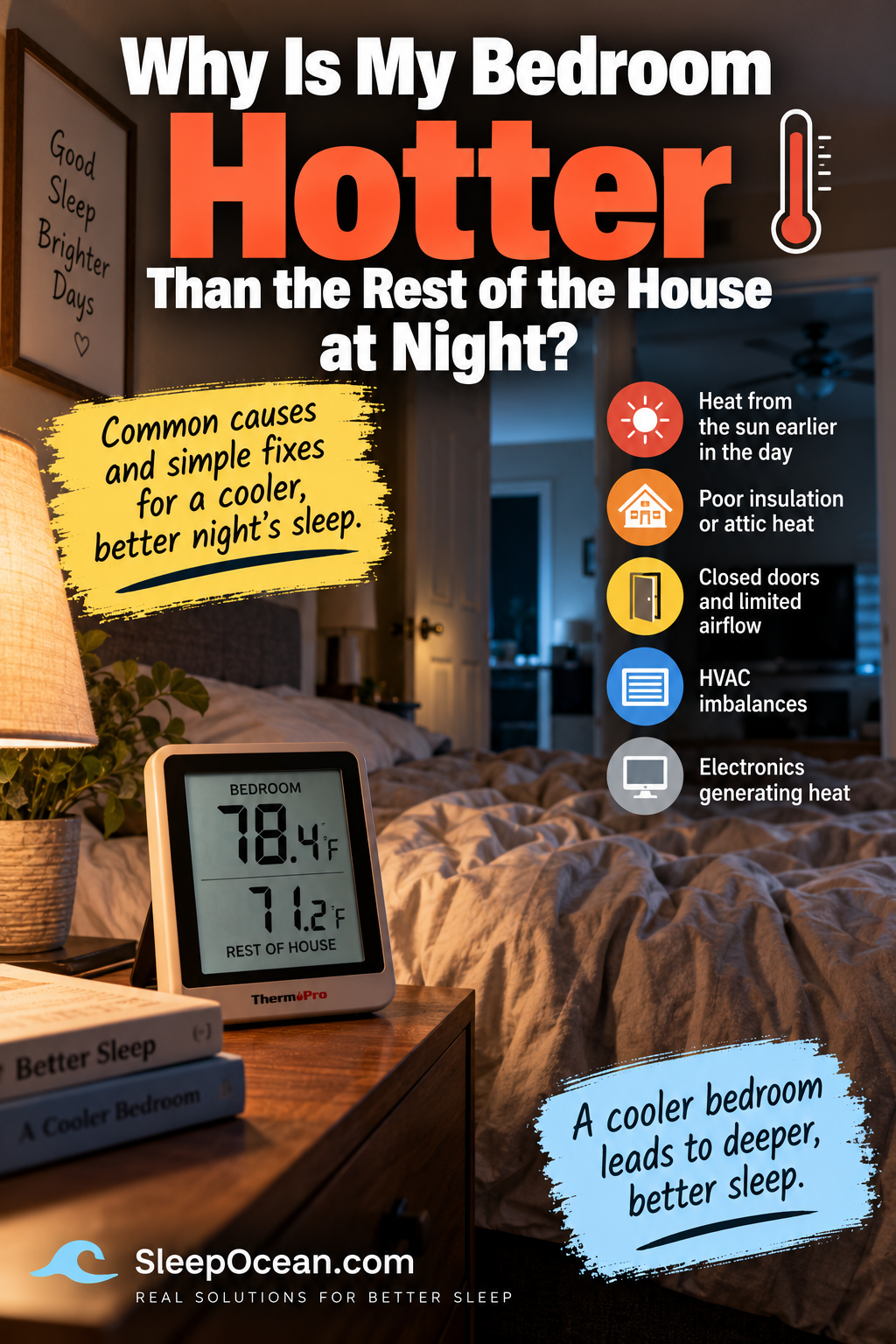
Suppose the thermostat is in a cool hallway while the bedroom gets afternoon sun or sits at the end of a long duct run. The system can stop cooling when the hallway reaches its target even though your bedroom still feels warm. That situation is also covered in bedroom hotter than the rest of the house, which explains how to compare the bedroom with the thermostat area and narrow down the cause.
I would compare the two places before lowering the temperature for the whole house. Check the bedroom thermometer when the AC shuts off. If the bedroom is consistently warmer, that is useful information to bring to an HVAC technician or landlord.
Also notice whether closing the bedroom door changes the pattern. Airflow and return-air arrangements can affect comfort from room to room. The Department of Energy notes that duct and return layouts can contribute to drafts and temperature differences between rooms.
I would not claim the thermostat is broken based only on one warm bedroom. The temperature difference might come from the room, its windows, air distribution, or the system’s controls.
Check for an overnight thermostat schedule
Many thermostats can change the set temperature automatically at a chosen time. You may fall asleep in a cool room, then wake after the schedule switches to a warmer overnight setting.
Look at the programmed schedule, including any weekday and weekend differences. If the wake-up happens at almost the same clock time each night, a scheduled change deserves attention.
Do not confuse that with normal cycling. An AC that reaches its set temperature and stops for a while is behaving differently from a thermostat that changes the set temperature at 2 a.m.
The Department of Energy explains that programmable thermostats can automatically adjust temperatures according to a schedule.
If you have a smart thermostat, check whether it has a sleep schedule, an away setting, or another mode that changes the target without you touching it at bedtime.
What if the system makes a noise when it shuts off?
If you wake to a click, bang, rattle, or vibration, investigate the sound itself. The timing can tell you whether it comes from the indoor unit, an air vent, a window AC, or something else in the room.
A brief sound at the end of a cycle does not automatically mean a major repair is needed. A new, loud, repeated, or worsening noise is worth having checked. Avoid opening electrical or mechanical parts to diagnose it while you are half asleep.
If you use a window unit, also check whether something near it vibrates only as the unit slows down. A loose object on a sill can make a surprising amount of noise.
I would record the sound when it happens if I could do so safely. That can be more helpful to a technician than trying to imitate it the next day.
What if the AC shuts off and does not come back on?
That is a different problem from a normal cooling cycle.
Check whether the thermostat is still set to cool and whether a schedule changed. See whether the whole home has lost power. Note whether the system tries to restart, makes an unusual sound, or never runs again.
If there is a burning smell, visible smoke, sparking, or another sign of an electrical problem, stop using the equipment and get qualified help. Do not keep resetting a system that repeatedly trips or behaves abnormally.
If the bedroom becomes dangerously hot, especially for someone who is more vulnerable to heat, prioritize a cooler place to sleep and appropriate help. A separate fan moves air but does not replace cooling in extreme heat.

Could humidity be the reason you wake?
Sometimes the room does not feel especially hot. It feels sticky after the cooling cycle ends.
I would notice whether the sheets or air feel damp and whether the discomfort gets worse on humid nights. That gives you a more specific question than “Why does my AC keep waking me?”

Sleep Ocean already has an article on bedroom humidity and waking up tired. If dampness is the standout symptom, that is a better next step than buying a louder fan.
A three-night test that keeps things simple
I would use three nights to separate the most likely causes:
- Night one: Observe. Leave the setup as usual. Note whether you wake immediately when the AC stops or sometime later. Record the bedroom temperature when you wake if you have a thermometer.
- Night two: Test sound or airflow. If silence or still air was the first clue, try a separate steady sound or a room fan while leaving the cooling schedule unchanged.
- Night three: Check temperature and schedule. If you woke hot, review the thermostat schedule and compare the bedroom temperature with the thermostat reading.
You do not need perfect measurements. Even a note saying “AC stopped at 1:20, I woke right away, room still felt cool” is more useful than “The AC woke me again.”

If you are considering a fan primarily for its sound, Sleep Ocean’s fan-noise guide discusses what to listen for. I would determine whether sound is the problem before shopping.
Questions people ask about AC cycling at night
Is it normal for the AC to turn on and off while I sleep?
Yes, a cooling system commonly runs until its control senses the target temperature, then stops and starts again later. The exact behavior depends on your system and settings. The concern here is whether the cycle leaves your bedroom uncomfortable or produces a sound that repeatedly wakes you.
Should I set the thermostat much colder to keep the AC running?
I would first check the bedroom temperature and thermostat schedule. A much colder setting could make the room uncomfortable while the system runs and may still fail to solve a noise or airflow issue.
Can a fan help if the AC keeps waking me?
It may help if what you miss is steady sound or air movement. If the bedroom keeps getting too hot, a fan alone may not address the heat. Test which part of the AC’s shutdown affects you before treating the fan as the answer.
What if I keep waking even when the AC stays on?
Then I would look beyond the cooling cycle. Check for light, other noise, bathroom trips, and ongoing sleep problems. If poor sleep regularly affects you, talk with a healthcare professional. The CDC recommends doing so when sleep trouble is persistent or you notice signs of a sleep disorder.
What I would check tonight
Before bed, look at the thermostat’s overnight schedule. Put a thermometer near the bed if you have one. When you wake, notice whether the room is quiet, still, warm, damp, or suddenly noisy.
That one observation determines the next sensible test. Silence calls for a sound check. Still air calls for an airflow check. A warmer bedroom calls for a room-temperature and thermostat check. A new mechanical noise calls for attention to the equipment.
About the author: Nora Whitcomb writes practical sleep guides for Sleep Ocean, helping readers identify the change that interrupts their night before choosing a fix.
As an Amazon Associate we earn from qualifying purchases through some links in our articles.