

If my eyes felt gritty the moment I opened them, I’d probably look at the fan first. Mine runs while I sleep, and it’s an obvious source of moving air. But “the fan was on” wouldn’t be enough to tell me why my eyes felt dry.
Waking with dry eyes can happen when tears don’t keep the eyes comfortably wet overnight. Air blowing toward the bed may make that worse. So can dry room air. In some cases, the issue may involve the eyelids or the eyes themselves rather than anything I can fix by moving a fan.
The useful starting point is what the morning actually feels like. Are both eyes mildly gritty and better after I’m up for a while? Is one eye especially painful? Do they water even though they feel dry? Those details tell me more than the fact that I slept beside a fan.
What do dry eyes feel like when I wake up?
I’d use ordinary words rather than trying to name an eye condition. Someone might describe their eyes as:
- Gritty, as though there’s sand in them.
- Stinging or burning when they first open them.
- Sticky or uncomfortable after a night with a fan or heat running.
- Watery, even though they also feel irritated.
- Sensitive to light or temporarily blurry.
Watery eyes sound like the opposite of dry eyes, but irritation can sometimes make eyes water. The National Eye Institute’s dry-eye guide explains why symptoms aren’t always as simple as “my eyes need more water.”
I would not put sudden severe pain, a significant vision change, or a very red eye into the same category as mild morning grittiness. Those symptoms deserve prompt professional advice.


Could my fan be drying my eyes out overnight?
Yes, direct airflow is worth checking. Moving air across the face can make eyes feel dry, and eye-care guidance recommends avoiding air blowing toward the eyes when dryness is a problem.
I know I have trouble sleeping without my fan, so “turn it off forever” isn’t a useful first step for me. I’d leave it running and change where the air goes. Could I hear it from across the room? Could I point it toward a wall or the foot of the bed rather than directly toward my pillow?
I’d keep that setup for a few nights and notice whether mornings change. If they do, I have a practical answer that lets me keep the fan. If they don’t, I wouldn’t keep shifting it around and assume the answer must still be airflow.
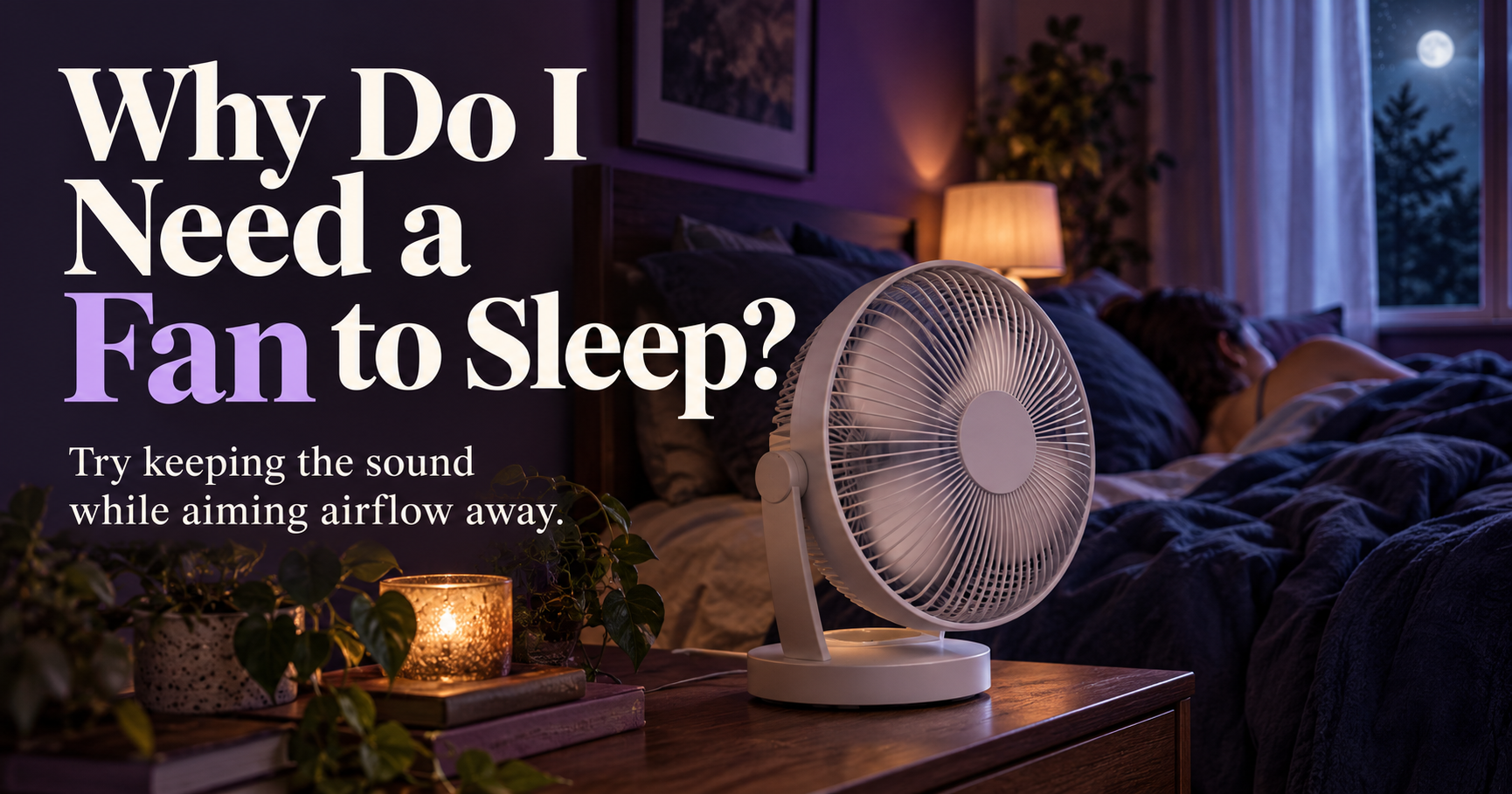
There’s another reason to make only one change at a time: I may want the fan for its sound as much as its breeze. In why I need a fan to sleep, I separate those two parts of the habit. That distinction helps when the breeze bothers my face but silence makes it harder to fall asleep.


Is it the fan or the bedroom air?
A fan moves the air in the room. If that air is dry, aiming the fan away from my face may reduce direct exposure, but it won’t change the room’s humidity.
I wouldn’t decide I need a humidifier based only on how my eyes feel. I’d check the bedroom humidity first, particularly if the heat or air conditioner has been running. Then I could tell whether the room air is unusually dry or whether I’m guessing from one symptom.
I’d also avoid adding moisture without checking for an existing dampness problem. Sleep Ocean already has a guide to why a bedroom feels humid at night. A room that is already damp does not need a humidifier because I woke with irritated eyes.
What if I wake with dry eyes and a dry mouth?
I’d notice both symptoms, but I wouldn’t assume they have one cause. Direct airflow might be making mornings less comfortable. A blocked nose and mouth breathing might explain the dry mouth. Eye dryness can have its own causes.
That’s why I’d describe both symptoms if I spoke with a doctor or eye-care professional. “My eyes feel gritty every morning, and my mouth is dry too” is more informative than deciding the fan explains everything.
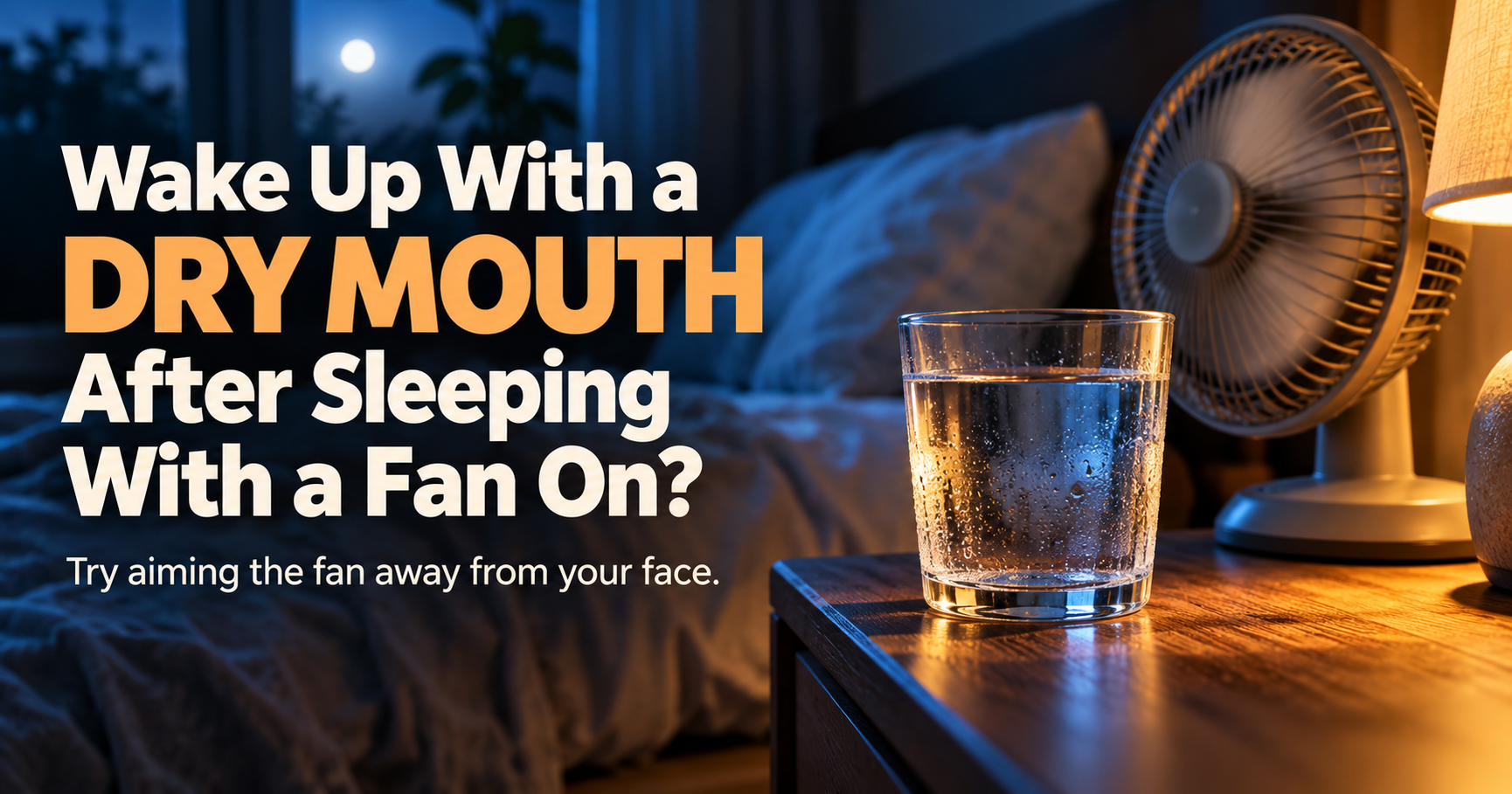
I’ve gone into the mouth-breathing and airflow questions in waking with a dry mouth after sleeping with a fan on.
What if my eyes water instead of feeling dry?
I wouldn’t dismiss irritation just because tears are running down my face. Eyes can water in response to a problem with the tear film. Allergies and other conditions can also cause watery eyes, so I’d pay attention to what comes with it.
Itchy eyes and sneezing would make me think about an allergy pattern. Burning or a gritty feeling without much itching might point me in a different direction. Thick discharge, significant redness, or pain would be reasons to get advice rather than keep adjusting the bedroom.
I’d also think about timing. Do my eyes feel bad only for the first few minutes after waking? Do they remain uncomfortable all morning? Do symptoms start while I’m awake, sitting by a heater or air vent? A problem that follows me out of the bedroom may need more than a change in fan placement.
Could my eyelids be involved while I sleep?
This is a possibility I would not be able to confirm by myself while asleep. Some people do not close their eyelids completely at night, leaving part of the eye exposed. That can cause symptoms that are particularly noticeable in the morning.
I wouldn’t assume this is happening just because I woke with dry eyes. But if one eye is consistently worse, morning symptoms are persistent, or moving the fan doesn’t help, I’d tell an eye-care professional exactly when the discomfort happens. They can examine the eyes and eyelids rather than having me guess.
I also wouldn’t tape my eyelids shut based on an internet tip. Eye pain and irritation deserve a proper look before I try to treat an unconfirmed cause.
What about allergies in the bedroom?
If my eyes itch and water, my nose runs, and I sneeze when I get into bed or first wake up, I’d check the bedding and bedroom along with the airflow.
I’d wash pillowcases and sheets, clean visible dust from the fan, and notice whether symptoms are different in another sleeping space. Those are reasonable things to observe. They don’t prove I’m allergic to a particular thing.
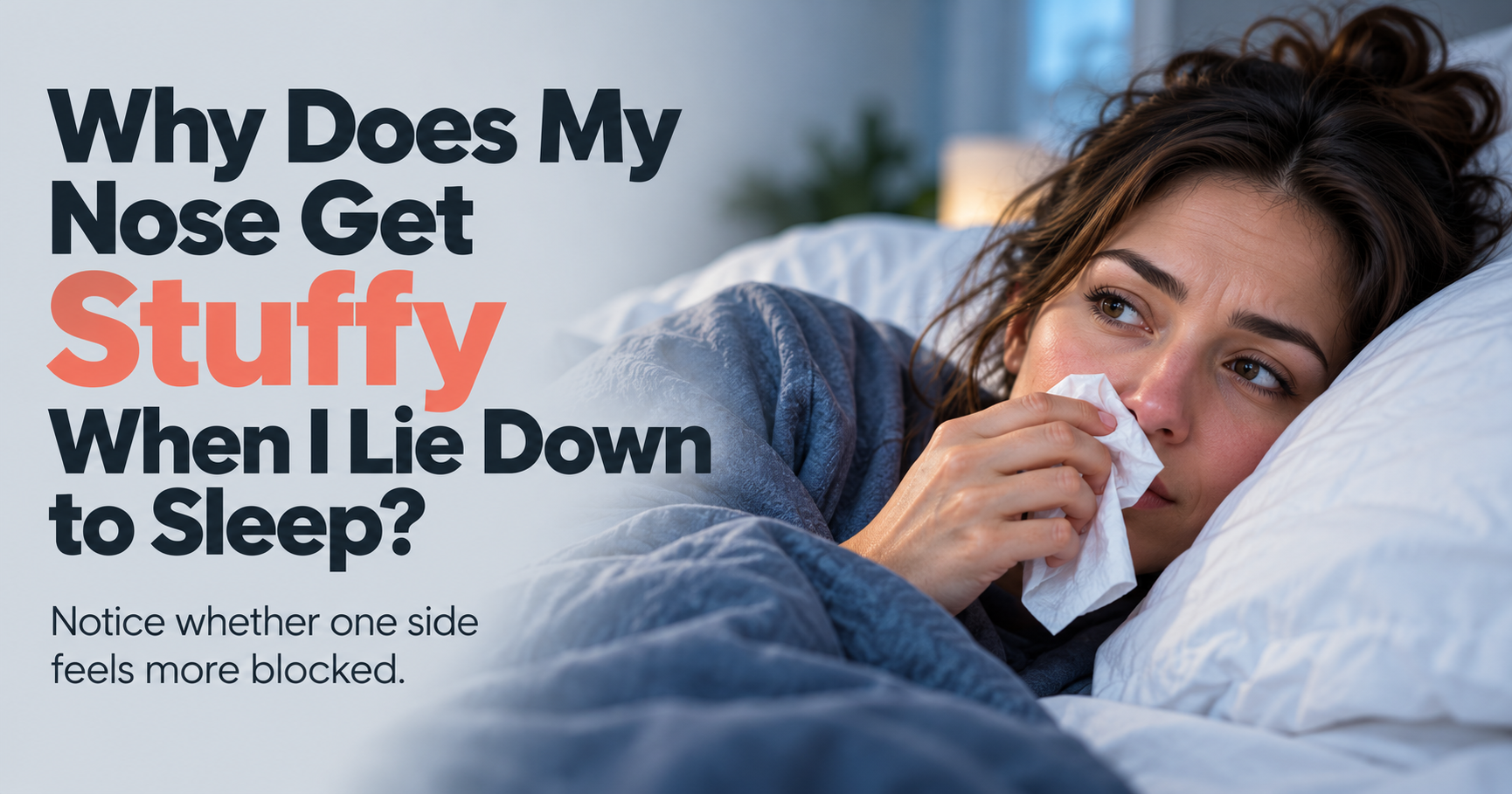
If a stuffy nose starts as soon as I lie down, that’s a slightly different question. I’ve covered the positional and bedding clues in why my nose gets stuffy when I lie down to sleep.
The eye and nose symptoms together are worth mentioning when I ask for care. An eye doctor or other healthcare professional can help sort out dryness, allergies, and other causes if the problem keeps returning.
The change I’d try first tonight
I’d start with the part of my bedroom I can adjust in seconds: the direction of the fan. I’d keep it on, point it away from my face, and avoid having another vent blow straight toward my pillow.
Then I’d leave the rest of my routine alone long enough to notice a difference. I wouldn’t add a humidifier, buy drops, change pillows, and move the fan all on the same night. If the next morning feels better, I want to know which change may have helped.
If I wear contact lenses, I’d follow my eye-care professional’s instructions about sleeping in them. I wouldn’t assume a fan caused morning irritation while overlooking something directly touching my eyes overnight.
Should I use eye drops before bed?
I’d ask a pharmacist or eye-care professional which kind makes sense for my symptoms, especially if I need them regularly. Products labeled “eye drops” do different jobs. I wouldn’t grab a redness-relief product and assume it treats dryness.
The National Eye Institute explains common dry-eye treatments, including artificial tears, but the right approach depends on what is causing the symptoms. If I keep waking uncomfortable, I’d rather get help identifying the problem than use drops indefinitely while hoping I guessed correctly.
When would I make an eye appointment?
I’d make one if the morning dryness keeps happening, affects my vision, or doesn’t improve after simple changes to direct airflow. I’d explain whether one eye or both are affected, whether they itch or hurt, whether they water, and how long it takes to feel normal after I get up.
I’d seek prompt care for significant pain, a sudden vision change, or marked redness, particularly if it’s mostly in one eye. That isn’t a situation where I’d run a weeklong experiment with my fan.
For an ordinary gritty morning, I’d start with the airflow because it’s easy to check. I’d just keep an open mind if changing it doesn’t help. My fan can be part of my sleep routine without being the answer to every symptom I notice when I wake.
Nora Whitcomb writes for Sleep Ocean about the small bedroom details that can make mornings uncomfortable and the practical questions worth asking before changing everything at once.
As an Amazon Associate we earn from qualifying purchases through some links in our articles.