
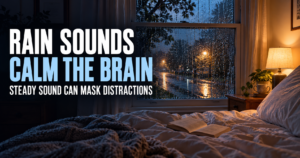
Some nights, the room is quiet but my attention is not. I notice the refrigerator starting up down the hall. Then a car passes. Then I find myself listening for another sound instead of settling down.
Rain sounds can give my ears something steady and familiar to rest on. That is the practical reason I’d try them for sleep: a gentle rain recording may make small, unpredictable sounds less noticeable and give me a background sound that does not ask for my attention.
It will not put everyone to sleep. If you find yourself waiting for the next drip or wondering whether thunder is coming, that particular recording may keep you awake. The kind of rain matters as much as the fact that it is rain.
Why Rain Can Feel Easier to Ignore Than a Quiet Room
When a bedroom is nearly silent, a single click or thump stands out. With gentle rain playing in the background, some of those little changes may be less noticeable. The CDC suggests a fan or sound machine as one way to camouflage disruptive sounds in a sleep environment.
Rain also gives you a sound without words to follow. There is no conversation to understand, song to recognize, or story that makes you want to hear what happens next.
That does not mean your brain has a special response to rain that guarantees sleep. I’d keep the claim smaller and more useful: if a particular rain sound helps you stop paying attention to the room, it may help you settle down.
Try listening at a low volume for a few minutes before bed. If you keep noticing details in the recording, switch to a steadier rain sound or turn it off. A sleep sound should be easy to leave in the background.
The Rain Sound I’d Choose for Bedtime
For sleep, I’d start with steady rain without loud thunder, sudden changes, talking, or music. Gentle variation is fine, but a sharp crack of thunder can undo the calm just as you’re drifting off.
Think about where the imaginary rain seems to fall. Rain on a roof, rain against a window, and rain falling outside in the open can sound quite different. A recording with prominent individual drops may be pleasant while you’re awake but distracting once the lights are off.
I’d listen for these details before playing a video all night:
- Does the sound stay at a fairly even level? A sudden increase in volume may wake you.
- Are there other sounds mixed in? Thunder, birds, traffic, and music change the experience.
- Can you hear a repeated edit? If you notice a short loop every few minutes, you may start waiting for it.
- Does it still sound pleasant through your bedroom speaker? Phone speakers can make rain sound thin or harsh.
If you enjoy a deep, continuous sound more than the texture of falling rain, our brown noise guide for a noisy night explains that option. I would choose whichever sound I can comfortably forget is playing.

Do Rain Sounds Actually Improve Sleep?
Some people say rain helps them relax or fall asleep, but I would not promise that an eight-hour recording creates deeper sleep. Studies of continuous background sound and sleep have produced mixed results, and a systematic review found the overall evidence for a sleep benefit to be very low quality. That research covers broadband sounds such as white noise, so it does not prove what a specific rain recording will do for you.
Your own question can be simpler than “Does rain improve sleep?” Ask, “Does this recording help with the thing that keeps me awake?”
If the problem is a quiet room that makes every small sound noticeable, rain may be useful. If you’re wide awake because the bedroom is too hot, your nose is stuffed up, or you’re worried about tomorrow, a rain video may be pleasant without addressing the main problem.
I’d try it for a few nights and notice whether I spend less time listening to the room. That is more meaningful than trying to prove it worked from one night or a sleep-tracking score.
How Loud Should Rain Sounds Be for Sleeping?
Start lower than you think you need. I’d set the volume while lying in bed, with the speaker where it will stay all night. I want to hear the rain when I pay attention to it, but I do not want it to dominate the room.
If I have to crank it up to cover someone shouting or loud traffic, I’d deal with that noise separately where I can. Adding one loud sound on top of another is unlikely to make the bedroom feel restful.
Be especially careful if you use headphones or earbuds. Sounds that seem gentle can still be too loud when played close to your ears for hours. The CDC notes that loud sounds played over an extended period can damage hearing.
A speaker at a comfortable distance is my first choice for an overnight recording. I can keep the volume modest, move it if the sound feels too close, and avoid sleeping with earbuds pressed against my ears.

Should You Play Rain All Night or Use a Timer?
I’d base that choice on what happens after I fall asleep.
Use a timer if the rain mainly helps you settle down. If you sleep fine once you’re out, there is no need to keep it playing just because the video is long.
Let it play overnight if a steady sound helps when the fan or AC stops, the house makes noises, or traffic picks up before morning. Test your device and playback settings first so an unexpected stop or the next autoplayed video does not interrupt you.
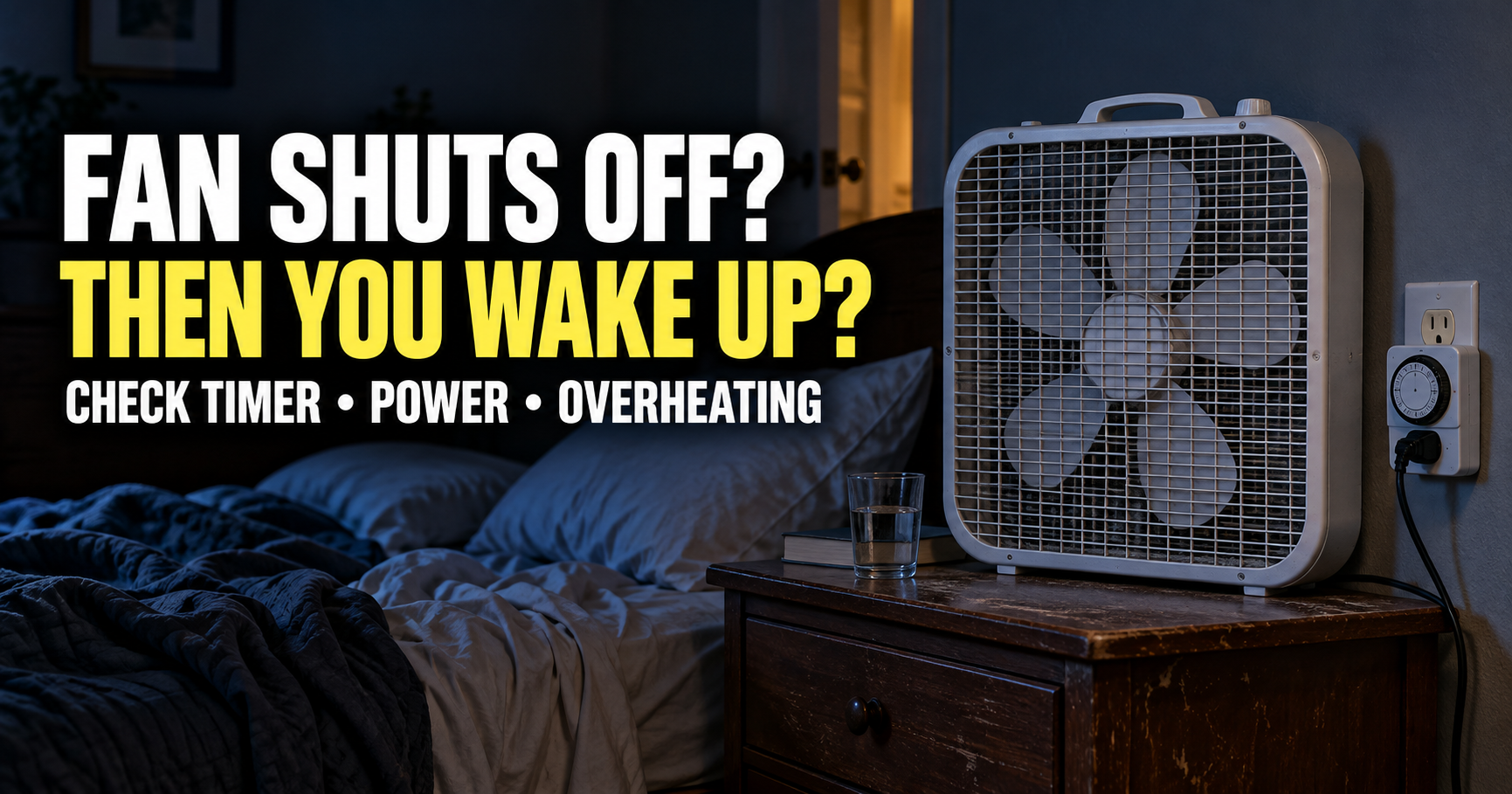
If you wake as soon as a fan goes quiet, a recording could help you test whether the changing sound is part of the problem. My article on waking up when your fan turns off also walks through the other possibility: you may miss the airflow, not just the noise.
I would give the timer setting a separate night from the all-night setting. Then I could tell which one actually felt better.
Keep the Screen From Undoing the Calm
A rain video can sound peaceful while its glowing screen lights up your bedroom. Before bed, I’d find a way to keep the display dark or out of sight while the audio plays.
Check whether your TV can turn its screen off without stopping the sound. If you use a phone or tablet, dim it, silence notifications, and make sure the audio continues with your chosen playback setup. Test that part while you’re still awake.
I would also check for playback interruptions. Depending on your device and YouTube settings, a video might stop, an ad might play, or autoplay might select something entirely different. Knowing what your setup does is more useful than assuming an eight-hour video will play exactly as expected.
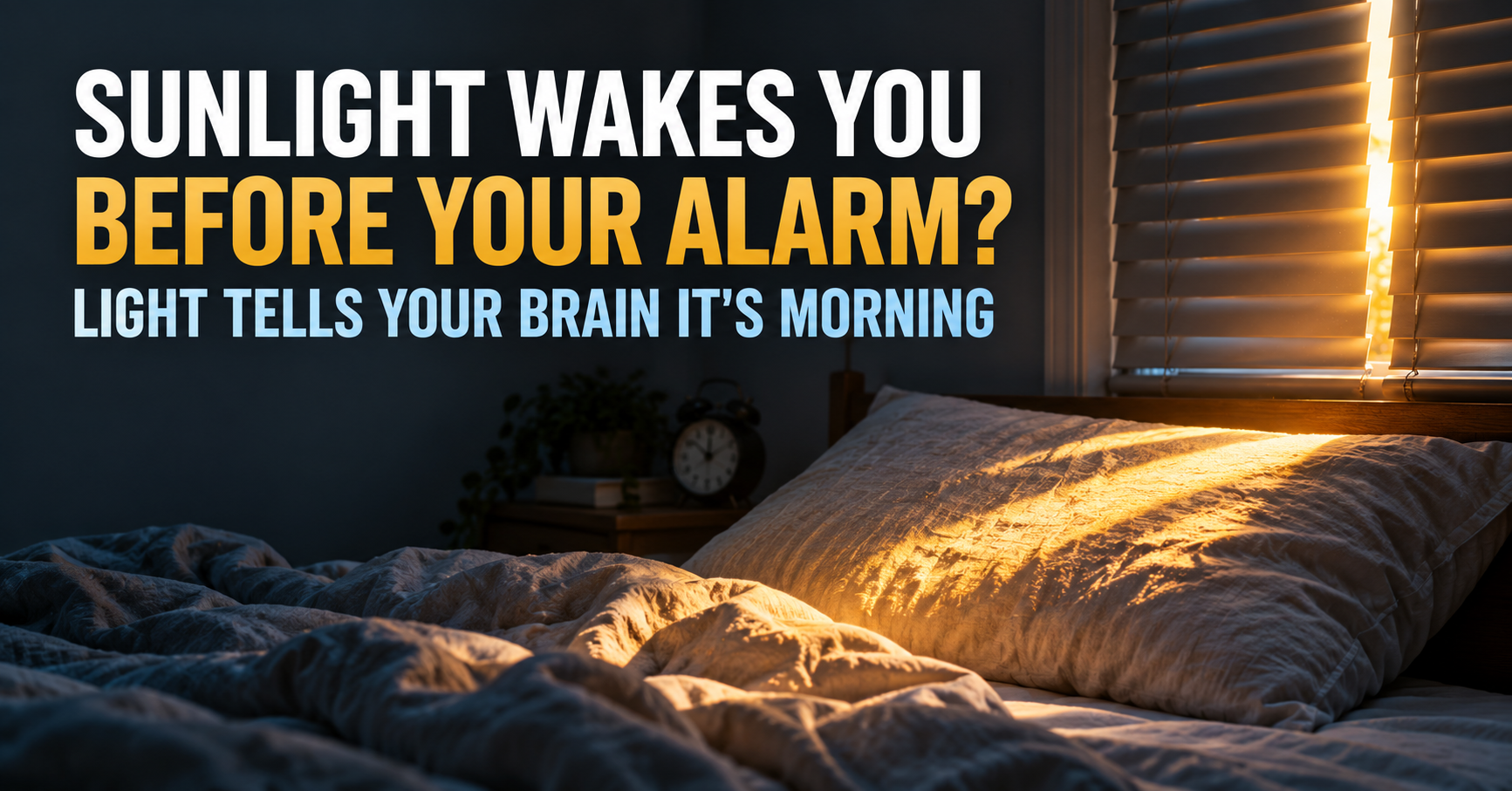
For a bedroom where early light already bothers you, keeping a screen on can add to the problem. Why sunlight wakes you before your alarm covers the morning side of that sleep environment.

When Rain Sounds Are a Poor Match
Rain is not a sound everyone can tune out. If you grew up around storms, worry about water leaks, or find dripping sounds irritating, a rain recording may make you more alert.
I’d switch sounds if I noticed any of these patterns:
- I keep listening for thunder or another change in the recording.
- I wake when the recording repeats or stops.
- I turn it up louder each night to cover a real-world noise.
- My sleep feels worse on nights when it plays.
There is nothing to “push through” here. The point is to make the bedroom easier to sleep in. A fan, another steady sound, or a quieter room may fit you better.
If your main problem is noise from outside the room, start with its source as well. Shut the window fully, check whether a rattling vent needs attention, or move the speaker away from your pillow so you can use a lower volume. Rain can be one part of the setup, but it cannot soundproof a wall.
My Simple Test for a Rain Video
If you’re curious whether rain sounds belong in your nighttime routine, I’d keep the test easy enough to repeat.
- Pick one recording. Avoid switching among several sounds every few minutes.
- Set a comfortable, low volume. Do it from your pillow, with the lights as you normally keep them.
- Choose a timer or all-night playback. Stick with that choice for two nights.
- Notice the result in the morning. Did the sound help you settle down? Did it wake you? Did something else wake you instead?
Then change just one thing if needed. Move the speaker, lower the volume, or try a timer. I would not change the rain sound, bedding, thermostat, and bedtime all at once and then guess which part helped.
For a broader choice of recordings, these Sleep Ocean sleep sounds give you another place to start. The best one is the sound you can leave alone once your head hits the pillow.

Questions About Sleeping With Rain Sounds
Why do I like rain sounds when I’m trying to sleep?
You may find the sound familiar and easy to ignore, or it may make little changes in the room less noticeable. What matters is how you respond to a particular recording. If it catches your attention instead, try a steadier sound.
Are real rain sounds better than white noise?
There is no good reason to promise that real rain works better for everyone. Rain has natural variation; white noise is more uniform. Listen to both through the speaker you use at night and choose the one that is easiest to leave in the background.
Can rain sounds cover up snoring?
They may make mild snoring less noticeable for some people, but loud snoring can still come through. If snoring includes gasping or pauses in breathing, the person who snores should discuss it with a healthcare professional.
Can rain sounds make it harder to sleep?
Yes. Thunder, obvious loops, loud volume, or a recording that makes you listen for changes can become a distraction. Turn it off if it is making you more alert.
Do I need to listen for the full eight hours?
No. A long recording gives you the option to keep the sound going. If a shorter session helps you fall asleep and silence does not wake you later, a timer may fit better.
About Nora Whitcomb: Nora writes practical sleep guides for Sleep Ocean, helping readers test small changes to their bedrooms and nighttime routines without promising that one sound works for everyone.
As an Amazon Associate we earn from qualifying purchases through some links in our articles.