Waking up with a headache every morning isn’t normal — it’s a signal. Here are the most common causes and exactly what to do about each one.

Waking Up With a Headache Every Morning Is Not Normal — Here’s What It Means
Most people assume a morning headache is just part of life — something to push through with coffee and ibuprofen. But if you’re waking up with head pain regularly, several times a week or every single morning, that pattern is a signal. Your body is telling you something is wrong during the night, and the headache is just the most obvious symptom you’re noticing.
The good news is that most causes of chronic morning headaches are identifiable and fixable. The tricky part is that several different things can cause the same symptom — and the fix for one cause is completely different from the fix for another. This guide walks through each major cause so you can figure out which one applies to you.



1. Sleep Apnea — The Most Overlooked Cause
If you wake up with a headache most mornings, sleep apnea should be at the top of your list of suspects. It’s one of the most common causes of morning headaches and one of the most frequently missed because so many people don’t know they have it.
Sleep apnea causes your airway to partially or fully collapse repeatedly during sleep. Each time it happens, oxygen levels in your blood drop and carbon dioxide levels rise. That CO2 buildup causes blood vessels in the brain to dilate — and that dilation is what produces the classic dull, pressure-type headache that greets you when you wake up.
The headaches from sleep apnea are usually described as a band of pressure across the forehead, present immediately upon waking, and typically fading within 30 minutes to an hour of getting up and moving around. If that pattern sounds familiar, it’s a strong indicator.

Other signs that point toward sleep apnea: loud snoring, waking during the night, waking with a dry mouth, feeling exhausted after a full night of sleep, and a bed partner who’s noticed you stop breathing. Sleep apnea carries serious long-term health consequences if left untreated — it’s not something worth waiting on.

What to do: Talk to your doctor. A sleep study is the definitive diagnostic tool, and home sleep tests have become widely available and relatively affordable. In the meantime, sleeping on your side reduces the number of apnea events per night. A anti-snoring mouthpiece can also provide meaningful short-term relief while you pursue diagnosis.


2. Dehydration
Your body loses water overnight through breathing and sweating — more than most people realize. If you go to bed even mildly dehydrated, you’ll wake up more dehydrated still, and the brain — which is extremely sensitive to fluid levels — responds with a headache.
Dehydration headaches are typically described as a dull, throbbing ache that improves significantly after drinking water in the morning. If you notice your headache starts fading fairly quickly after you hydrate, this is likely at least part of your problem.
Certain things dramatically accelerate overnight dehydration: alcohol the night before, a warm or dry bedroom, sleeping with your mouth open, and simply not drinking enough water during the day.

What to do: Drink a full glass of water 30–60 minutes before bed. Keep water on your nightstand so you can hydrate immediately upon waking. If your room is running dry — especially in winter with heating systems running — a humidifier can help maintain ambient humidity and reduce the amount of moisture you lose through breathing overnight. Also check your bedroom humidity: bedroom humidity levels directly affect how rested and comfortable you feel.
3. Teeth Grinding (Bruxism)
Bruxism — grinding or clenching your teeth during sleep — is an extremely common and massively underdiagnosed cause of morning headaches. Most people who grind have no idea they’re doing it. The grinding happens unconsciously during sleep and can be silent enough that a bed partner doesn’t notice either.
The headache from bruxism comes from the sustained tension in the jaw muscles — specifically the masseter and temporalis muscles — which refer pain upward into the temples and across the forehead. It often feels like a tension headache localized to the temples, and may be accompanied by a sore or stiff jaw, facial tenderness, or worn-down teeth that your dentist may have flagged.

Stress and anxiety are the primary drivers of bruxism. If you’re going through a high-stress period, grinding typically gets worse. Chronic stress that affects your sleep often affects your jaw at the same time.
What to do: See your dentist — they can confirm bruxism from wear patterns on your teeth and fit you for a night guard, which is the most effective treatment. Managing stress and doing jaw-relaxation exercises before bed can reduce severity. Some people find magnesium supplementation helpful for reducing the muscle tension component of bruxism.

4. Poor Sleep Position and Neck Tension
How you sleep matters more than most people give it credit for. Sleeping in a position that strains your neck — particularly stomach sleeping, which forces your neck into an extreme rotation for hours at a time — creates sustained muscle tension that radiates upward into the base of the skull and across the head by morning.
The headache from poor sleep position is often felt at the back of the head or base of the skull, sometimes radiating forward. It’s usually accompanied by neck stiffness and may worsen when you turn your head in the morning. If you regularly wake up needing to stretch your neck before the headache starts to ease, position is likely a major factor.
Pillow choice plays into this significantly. A pillow that’s too thick, too flat, or doesn’t support the natural curve of your spine keeps your neck in a compromised position for the entire night. A cervical pillow for neck support may help maintain better alignment while you sleep.
What to do: If you’re a stomach sleeper, transitioning to side or back sleeping is the single most impactful change. It takes a couple of weeks to fully adapt but the difference in morning head and neck tension can be dramatic. For side sleepers, make sure your pillow fills the gap between your shoulder and your head without propping your head too high. A cervical pillow designed for neck support is worth trying if standard pillows aren’t working.
5. Sleep Deprivation and Poor Sleep Quality
Not getting enough sleep — or getting enough hours but poor quality sleep — directly triggers headaches. Sleep deprivation affects serotonin and other neurochemicals involved in pain processing, lowering your pain threshold and making headache pain more likely and more intense.
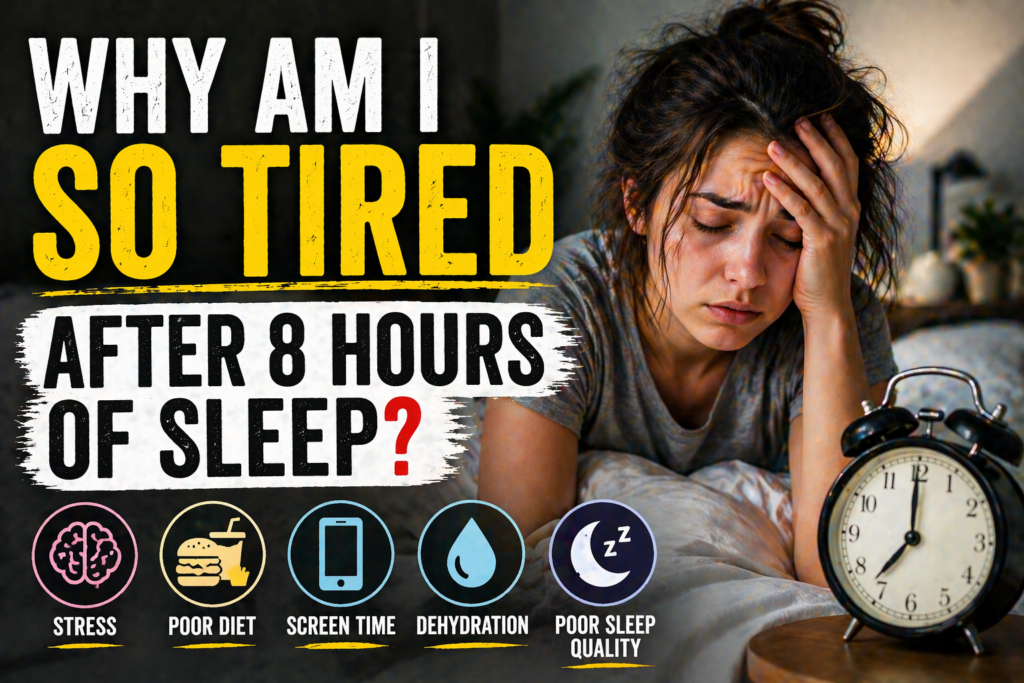
People who are waking up exhausted despite 8 hours of sleep are often experiencing the same sleep quality issues that produce morning headaches — fragmented sleep cycles, too little deep sleep, and not enough genuine restoration.
Ironically, sleeping too much can also trigger headaches — oversleeping disrupts serotonin levels in the same way that undersleeping does, which is why many people get headaches on weekend mornings when they sleep in significantly later than usual.

What to do: Prioritize consistent sleep timing over simply targeting more hours. Going to bed and waking up at the same time every day — including weekends — is more effective for headache prevention than sleeping in on weekends to compensate for weekday deprivation. Work through the core sleep hygiene fundamentals to improve quality, not just quantity.
6. Caffeine Withdrawal Overnight
If you’re a regular coffee or caffeine drinker, you may be experiencing mild caffeine withdrawal by morning. Caffeine has a half-life of around 5–6 hours, which means if your last cup of coffee was at 3pm, caffeine levels are dropping significantly by the time you wake up at 7am. For heavy caffeine users, that drop is enough to trigger a withdrawal headache.
Caffeine withdrawal headaches are typically throbbing and centered at the forehead or temples. The defining characteristic: they improve quickly after your morning coffee. If your headache reliably disappears within 30–45 minutes of your first cup, caffeine withdrawal is almost certainly the cause.
What to do: You have two options. Gradually reduce your overall caffeine intake to lower your dependence — this will cause temporary worse headaches during the reduction phase, then resolution. Or, more practically, simply ensure you’re not cutting off caffeine too early in the day. Shifting your last coffee to mid-afternoon can narrow the overnight withdrawal window. Avoid using caffeine as the morning fix without addressing the underlying dependence, as the cycle tends to intensify over time.
7. Alcohol the Night Before
Even moderate alcohol consumption can produce morning headaches that aren’t quite a full hangover but are clearly alcohol-related. Alcohol is a diuretic — it increases water loss — contributing to the dehydration mechanism described earlier. But it also directly disrupts sleep architecture, suppressing REM sleep in the first half of the night and causing a REM rebound effect in the second half that fragments sleep and leaves the nervous system activated.
That combination of dehydration, disrupted sleep cycles, and acetaldehyde buildup from alcohol metabolism produces the familiar morning-after dull headache even when you didn’t drink to excess.
The relationship between alcohol and sleep quality is worth understanding fully if evening drinks are a regular part of your routine — the sleep disruption goes well beyond just the headaches.
What to do: Hydrate well before bed after drinking. Cut off alcohol at least 3 hours before sleep when possible. Reducing overall consumption is the most effective long-term solution for this pattern of morning headaches.

8. Medication Overuse Headache
This one is counterintuitive but important: if you’re regularly taking pain medication — ibuprofen, acetaminophen, aspirin, or especially triptans — more than a couple of times per week for headaches, the medication itself may be causing rebound headaches.
Medication overuse headache (MOH), sometimes called rebound headache, develops when pain relievers are used so frequently that the brain adapts and headache threshold drops. You wake up with a headache, you take something for it, it relieves it temporarily, and by the next morning it’s back — creating a cycle that makes the morning headache pattern worse over time, not better.
What to do: This one genuinely requires medical guidance. Breaking the MOH cycle typically involves supervised tapering off the overused medication, which causes temporary worsening before improvement. If you’re taking OTC pain relievers for headaches more than 10–15 days per month, discuss this with your doctor.
9. Allergies and Sinus Congestion
Sinus pressure that builds overnight — from allergies, a cold, or structural nasal issues — can produce a distinct type of morning headache centered behind the forehead, around the eyes, or across the cheekbones. Lying flat for hours allows congestion to accumulate and pressure to build in ways that don’t happen as much when you’re upright during the day. This guide to sinus pressure at night explains why lying down can make overnight congestion and facial pressure feel worse.
If your morning headaches come with facial pressure, a stuffy nose, post-nasal drip, or are worse during allergy seasons, sinus congestion is the most likely cause. Allergies that disrupt your breathing at night cause multiple sleep problems beyond just headaches — including poor sleep quality and disrupted oxygen flow.
What to do: Addressing the underlying allergy or congestion is the priority. Nasal saline rinse before bed clears congestion before it builds overnight. Elevating the head of your bed slightly — or using an extra pillow — reduces overnight sinus pressure buildup. Managing bedroom allergens (dust mites, pet dander, mold from humidity) addresses the root cause. Bedroom humidity that runs too high promotes dust mites and mold — both major allergy triggers.
10. Low Blood Sugar Overnight
Your brain runs on glucose, and if blood sugar drops significantly overnight — which can happen if you didn’t eat enough before bed, skipped dinner, or have blood sugar regulation issues — the brain registers this as a stressor and the result can be a headache by morning.
Low blood sugar headaches are typically accompanied by feeling shaky, lightheaded, or irritable in the morning, and improve relatively quickly after eating breakfast. People with diabetes or pre-diabetes are at higher risk, but this pattern can affect anyone.
What to do: Don’t go to bed on an empty stomach. A small snack with complex carbohydrates and protein before bed — like whole grain crackers with nut butter — can stabilize blood sugar through the night. If you’re experiencing regular morning shakiness or lightheadedness alongside headaches, discuss blood sugar regulation with your doctor.
How to Figure Out Which One Is Causing Your Headaches
The pattern and timing of your headache, alongside associated symptoms, is your best diagnostic tool before seeing a doctor:
- Forehead band of pressure, fades after an hour of being up: Sleep apnea is the leading suspect
- Temple pain, sore jaw, or dentist-flagged tooth wear: Bruxism
- Base of skull, stiff neck, stomach sleeper: Sleep position
- Improves fast after morning coffee: Caffeine withdrawal
- Improves after drinking water: Dehydration
- Facial pressure, stuffy nose, allergy season: Sinus congestion
- Drank alcohol the night before: Alcohol disruption and dehydration
- Taking pain meds frequently: Medication overuse rebound
Many people find they have more than one contributing factor. Sleep apnea plus dehydration is common. Bruxism and stress often coexist. Working through the most likely cause first, then reassessing, is a practical approach.
When to See a Doctor About Morning Headaches
Most morning headaches have benign, fixable causes. But some warrant medical evaluation:
- Headaches that are getting progressively worse over weeks
- Headaches accompanied by vision changes, confusion, weakness, or numbness
- A sudden severe headache unlike any you’ve had before
- Headaches paired with significant daytime fatigue, mood changes, or cognitive fog that isn’t improving
- Any headache pattern that doesn’t respond to the lifestyle interventions above after a few weeks of consistent effort
Your doctor can rule out secondary causes — elevated blood pressure overnight, neurological factors, medication issues — and refer you for a sleep study if apnea seems likely. Don’t push through chronic morning headaches indefinitely assuming they’re “just stress.” They’re usually telling you something specific and actionable.
The Bottom Line
Waking up with a headache every morning is your body sending a clear signal that something is disrupting your sleep or your physiology overnight. It’s almost never random, and it’s almost always fixable once you identify the actual cause.
Start with the most likely candidate based on your specific symptoms and pattern. Sleep apnea, dehydration, and bruxism account for the majority of chronic morning headaches in otherwise healthy adults. Fix the sleep environment, address the root cause, and most people see significant improvement within a few weeks.
If you’re also waking up exhausted on top of the headaches, start with this breakdown of why sleep isn’t restoring you — the two problems often share the same root cause. And if sleep apnea is a real possibility, understanding what happens when it goes untreated is important reading before you put off getting checked.
Frequently Asked Questions
Is waking up with a headache every morning serious?
It’s worth taking seriously as a pattern, even if the underlying cause turns out to be benign. Chronic morning headaches most commonly point to sleep apnea, bruxism, dehydration, or poor sleep quality — all of which are addressable. Headaches that are worsening, accompanied by neurological symptoms, or not responding to lifestyle changes warrant medical evaluation.
Can sleep apnea cause headaches every morning?
Yes — it’s one of the most common symptoms. The repeated drops in blood oxygen during apnea events cause CO2 buildup that dilates brain blood vessels, producing a dull pressure headache that’s typically present immediately on waking and fades within an hour of getting up.
Why do I wake up with a headache but no other symptoms?
Sleep apnea, bruxism, and sleep position issues often produce headaches as their only obvious symptom. Many people with sleep apnea have no idea they snore or stop breathing. Bruxism is frequently silent. If no other symptoms are present, consider a sleep study and a dental check as a starting point.
Can dehydration really cause a morning headache?
Yes. The brain is highly sensitive to fluid levels and overnight water loss through breathing and sweating is enough to trigger headaches in people who aren’t adequately hydrated going into sleep. This is especially pronounced in warm bedrooms or after alcohol consumption.
Does stress cause morning headaches?
Stress drives morning headaches primarily through two mechanisms: bruxism (jaw clenching and grinding during sleep) and sleep disruption that reduces restorative sleep quality. Addressing the stress directly — rather than just treating the headache symptom — produces the most lasting results.
What’s the fastest way to get rid of a morning headache?
Drink water immediately upon waking — dehydration is a component in many morning headache types. Get upright and moving, which helps if apnea-related CO2 buildup is a factor. Gentle neck and jaw stretches can ease tension-related headaches. For reliable long-term relief, the cause needs to be identified and addressed rather than managed symptom by symptom each morning.
About the Author: Ryan Callahan
Ryan spent years waking up with daily headaches before finally connecting the dots between his sleep environment and his morning pain. After discovering he had undiagnosed sleep apnea and a grinding habit, he became deeply invested in understanding the relationship between sleep quality and physical symptoms. He writes about sleep health, disorders, and practical approaches to getting genuine rest.
As an Amazon Associate we earn from qualifying purchases through some links in our articles.