Waking up unable to move or speak? Sleep paralysis is terrifying but treatable. Here’s exactly what’s happening in your brain — and how to make it stop.
You Wake Up. You Can’t Move. Here’s What’s Actually Happening.
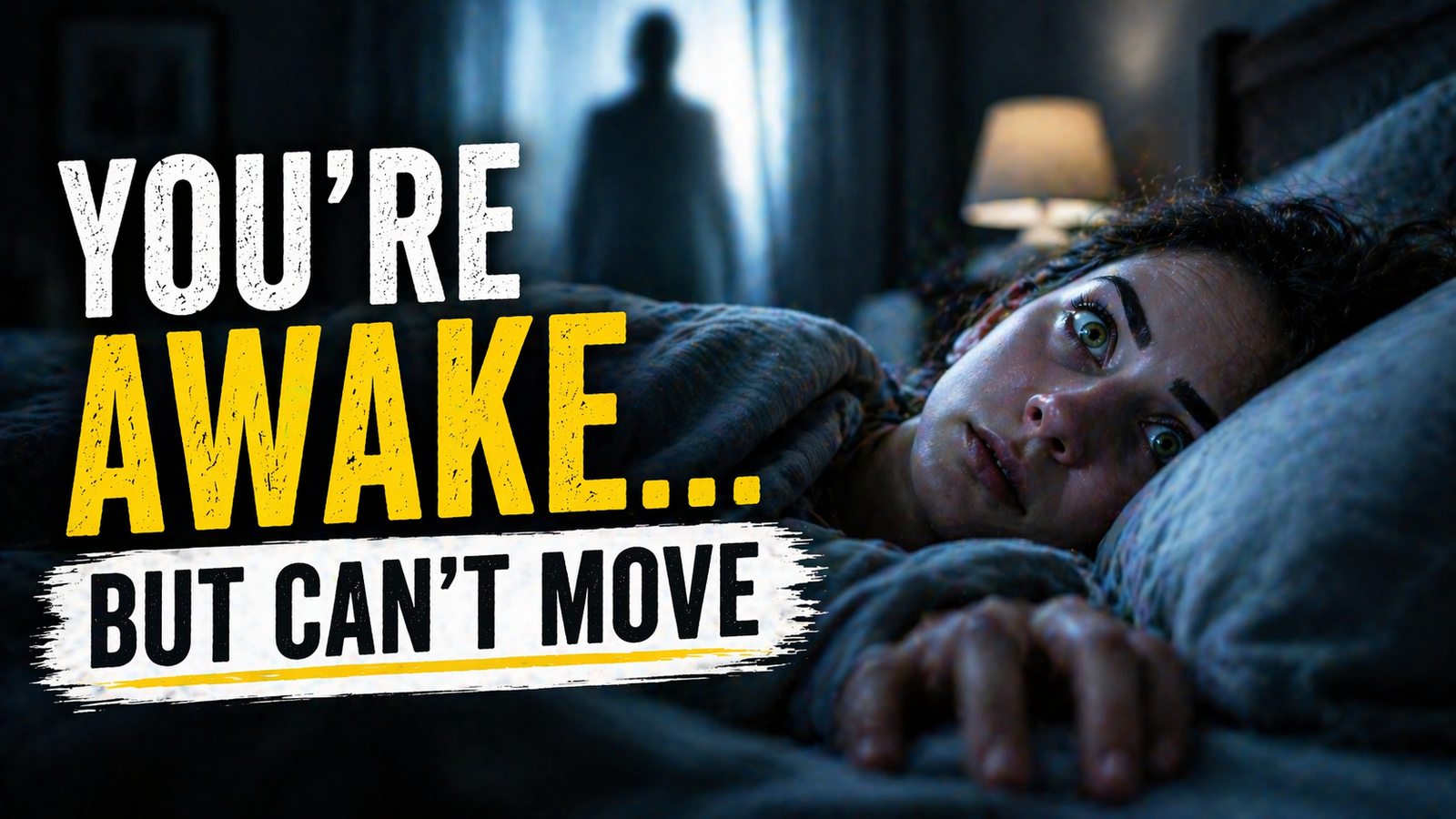
You open your eyes. You’re awake — you can see your room, you know exactly where you are. But your body won’t respond. You try to move your arm, your leg, turn your head — nothing. You try to call out and no sound comes. Sometimes there’s a crushing pressure on your chest. Sometimes you see something in the room that isn’t there. And then, after what feels like an eternity, it’s over.
Sleep paralysis is one of the most terrifying experiences a person can have during sleep — and one of the most misunderstood. Throughout history it’s been described as demonic visitation, old hag syndrome, shadow people, and supernatural attack. The reality is less dramatic but no less fascinating: it’s your brain and body briefly getting out of sync at the edge of sleep.
It’s also more common than most people realize, and in most cases it can be reduced or stopped entirely once you understand what’s driving it.

What Is Sleep Paralysis?
Sleep paralysis occurs at the transition between sleep and wakefulness — either as you’re falling asleep (hypnagogic paralysis) or, more commonly, as you’re waking up (hypnopompic paralysis). During REM sleep — the stage where vivid dreaming happens — your brain sends signals that essentially paralyze your voluntary muscles. This is a protective mechanism. It stops you from physically acting out your dreams and injuring yourself.
Normally, that paralysis lifts before you reach full consciousness. In sleep paralysis, you become conscious while the paralysis is still active. Your brain wakes up faster than your body does, and for anywhere from a few seconds to a couple of minutes, you’re aware and awake but completely unable to move.
The hallucinations — and they can be extremely vivid — happen because your brain is still partially in REM mode. Dream-like imagery bleeds into your conscious awareness. This is why people report seeing figures, feeling presences, hearing sounds, or feeling a weight on their chest. Your brain is still generating dream content even as your conscious mind is fully online.
It is not dangerous. Your breathing is not actually blocked — it just feels that way because the muscles involved in breathing are among the last to respond. But knowing it’s not dangerous does very little to make the experience less frightening in the moment.
How Common Is It?
More common than most people think. Research suggests somewhere between 8% and 50% of people experience sleep paralysis at least once in their lifetime, with roughly 5–8% experiencing it regularly. It can happen at any age but tends to be most prevalent in teenagers and young adults.
If you’ve had it happen multiple times, you are not alone — and you are not experiencing anything supernatural or medically alarming on its own. The key word there is “on its own” — because in some cases, recurring sleep paralysis is a signal worth paying attention to.
Why Does It Keep Happening? The Real Causes
A single episode of sleep paralysis can be essentially random — a product of one disrupted night. Recurring sleep paralysis almost always has identifiable triggers. Here are the most common:
Sleep Deprivation and Irregular Sleep Schedules
This is the number one trigger. When you’re sleep deprived or sleeping at inconsistent times, your brain’s REM regulation becomes unstable. REM sleep, which is normally concentrated toward the end of your sleep cycles, starts intruding at the edges — including the transition points where sleep paralysis is most likely to occur.
Shift workers, students pulling late nights, and anyone with a highly irregular schedule are disproportionately affected. If you’re chronically struggling to fall or stay asleep, the downstream effect on REM stability can trigger regular paralysis episodes.
Sleeping on Your Back
Studies consistently show that sleeping in the supine position — flat on your back — significantly increases the likelihood of a sleep paralysis episode. The exact mechanism isn’t fully understood, but it’s thought to relate to airway dynamics and REM sleep pressure in that position. This is also the same position most associated with snoring and sleep apnea events.
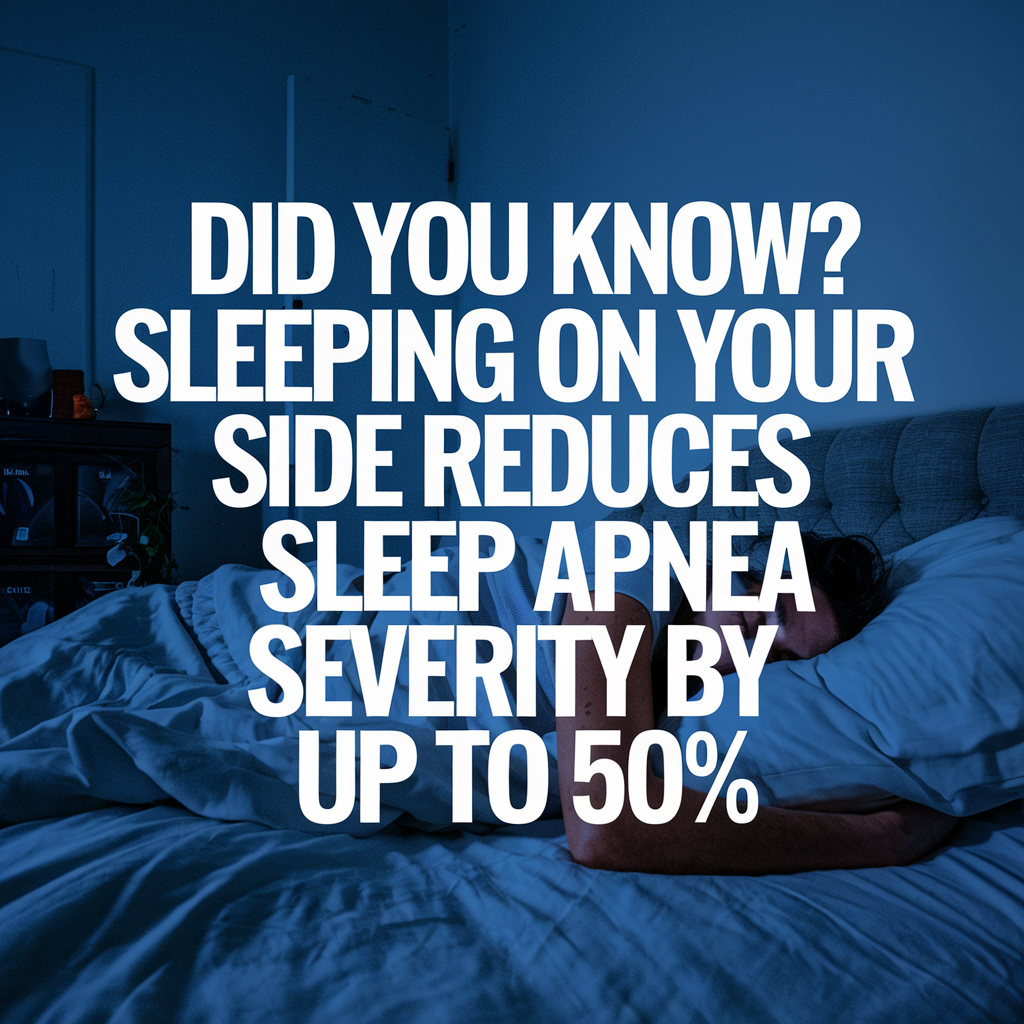
Many people who experience regular paralysis report that switching to side sleeping dramatically reduces their episodes — sometimes eliminating them almost entirely.
Stress and Anxiety
Elevated stress and anxiety are strongly associated with sleep paralysis frequency. Stress disrupts normal sleep architecture, increasing REM instability and making the transition points between sleep stages more chaotic. People going through high-stress periods — major life changes, grief, work pressure — often report their first or most frequent sleep paralysis episodes during those times.

If anxiety is already affecting your ability to sleep, sleep paralysis may be another downstream symptom of the same root problem. And chronic stress that bleeds into nighttime creates a feedback loop — paralysis episodes cause more anxiety about sleep, which causes more disruption, which causes more paralysis.
Disrupted or Fragmented Sleep
Anything that fragments your sleep — a noisy environment, a warm room, a snoring partner, needing to wake up repeatedly — increases your risk of sleep paralysis by repeatedly pulling you through the transition zones where it occurs. The more times you cycle through partial awakenings, the more opportunities there are for that brain-body sync to misfire.
A light sleeper who wakes at every small noise is going to cycle through the paralysis-prone transition state far more often than someone who sleeps solidly. Protecting your sleep environment — blocking light, managing temperature swings, using a fan for white noise — reduces fragmentation and with it, paralysis risk.
Narcolepsy
Sleep paralysis is one of the classic symptoms of narcolepsy — a neurological condition that affects the brain’s ability to regulate the sleep-wake cycle. If your sleep paralysis is accompanied by sudden muscle weakness triggered by emotion (cataplexy), excessive daytime sleepiness, or hypnagogic hallucinations regularly, it’s worth discussing with a doctor.
Narcolepsy is underdiagnosed. A sleep study can identify it. Most people with frequent sleep paralysis do not have narcolepsy, but it’s worth ruling out if episodes are severe or accompanied by these other symptoms.
Medications and Substances
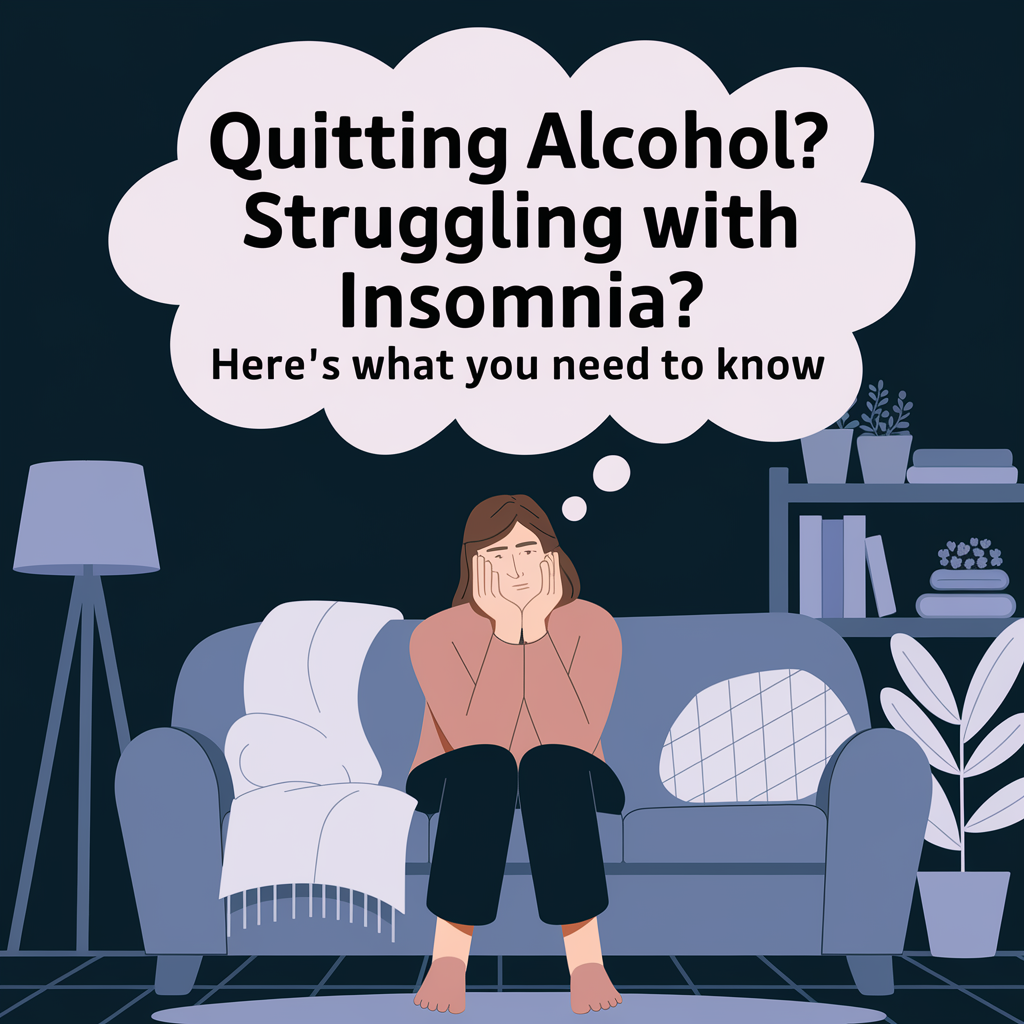
Certain medications — particularly SSRIs, some blood pressure medications, and sleep aids — can alter REM sleep patterns and trigger paralysis episodes. Alcohol withdrawal is also known to cause intense REM rebound — a surge of REM sleep after suppression — which can produce vivid hallucinations and paralysis. If you’ve recently started or stopped a medication and sleep paralysis appeared shortly after, that connection is worth mentioning to your doctor.

What the Experience Actually Feels Like — And Why
Sleep paralysis experiences vary widely but tend to cluster around a few common themes, all of which have neurological explanations:
The intruder presence: A feeling that someone or something is in the room. This is caused by hypervigilance activity in the amygdala — your brain’s threat-detection center — firing in a half-dream state. Your brain interprets the unusual state of awareness-without-movement as a threat and generates the sensation of a threatening presence.
The chest pressure / incubus: The feeling of a weight or entity sitting on your chest, making breathing difficult. This is thought to result from the combination of REM-related breathing changes and the amygdala-driven threat response interpreting the breathing difficulty as physical restraint.
Visual and auditory hallucinations: Seeing figures, hearing voices or sounds. REM dream-generation machinery is still partially active, bleeding visual and auditory content into conscious perception.
Out-of-body sensations: Some people experience a feeling of floating above their body or being pulled. This relates to the brain’s disrupted proprioception — its sense of where the body is in space — during the transition state.
None of these are signs of mental illness, supernatural experience, or neurological damage. They are the predictable output of a brain that is caught between two states it wasn’t designed to occupy simultaneously.
How to Stop Sleep Paralysis: What Actually Works
There is no single medication approved specifically for sleep paralysis in otherwise healthy people. But the evidence-backed approaches below work well for most people who apply them consistently.
Fix Your Sleep Schedule First
This is the single highest-impact change you can make. Going to bed and waking up at the same time every day — including weekends — stabilizes your circadian rhythm and reduces the REM instability that drives most paralysis episodes. Even a week of consistent scheduling can produce noticeable results.

If you’re chronically short on sleep, you need to address that too. Catching up on weekends helps less than you think — what your brain needs is consistent, adequate sleep night after night. Work through the sleep hygiene fundamentals systematically.
Stop Sleeping on Your Back
If you’re a back sleeper experiencing regular paralysis, switching to your side is one of the fastest interventions available. Some people sew a tennis ball into the back of their pajama top to prevent rolling supine during sleep. Others use a body pillow to maintain a side position. It feels awkward at first but most people adapt within a week or two.
Reduce Stress and Anxiety Before Bed
A consistent wind-down routine in the 30–60 minutes before sleep makes a real difference. The goal is to lower nervous system activation before you enter sleep — reducing the anxiety load your brain carries into REM.
Practical approaches: journaling to offload worry, light stretching, a consistent pre-sleep routine that signals safety and wind-down to your nervous system. If anxiety is a significant ongoing issue, addressing it directly — rather than just managing symptoms at bedtime — produces the most durable results.
Protect Your Sleep Environment

Reducing sleep fragmentation directly reduces paralysis frequency. This means controlling your room temperature — ideally between 60 and 68°F — using blackout curtains to eliminate light intrusion, and addressing noise with a fan or white noise source. The fewer times your sleep is lightly disrupted, the fewer opportunities sleep paralysis has to occur.

Also worth eliminating: sleeping with the TV on. The irregular light and sound changes are exactly the kind of stimulus that nudges you through light sleep transitions repeatedly all night.
In the Moment: How to End an Episode Faster
When you’re in a sleep paralysis episode, the instinct is to fight it — to try to force movement. This tends to prolong it and intensify the fear response. What actually works better:
- Focus on moving one small body part — a finger, a toe. Small movements break through the paralysis faster than trying to sit up.
- Control your breathing — slow, deliberate breaths reduce the panic response and help your nervous system shift out of the REM state.
- Don’t fight the hallucinations — recognizing “this is sleep paralysis, I am safe, this will end in seconds” dramatically reduces the terror of the experience even if it doesn’t end it faster.
- Try to cough or make a sound — some people find that attempting to vocalize, even if nothing comes out, helps trigger the transition back to full wakefulness.
Over time, many people who experience sleep paralysis regularly develop a kind of mastery over it — recognizing the state immediately and remaining calm through it, which makes each episode shorter and far less distressing.
When to See a Doctor
Occasional sleep paralysis in an otherwise healthy person is not a medical emergency. But you should speak with a doctor if:
- Episodes are happening multiple times per week
- They’re accompanied by excessive daytime sleepiness that isn’t explained by short sleep
- You experience sudden muscle weakness when laughing or experiencing strong emotions
- The episodes are causing significant anxiety or you’re avoiding sleep because of them
- You’ve made lifestyle changes and seen no improvement after several weeks
A sleep specialist can evaluate whether an underlying condition like narcolepsy is contributing and whether a formal sleep study makes sense for your situation.
Can Sleep Paralysis Be Dangerous?
Physiologically, no. Your airway is not actually obstructed. Your heart is not in danger. The paralysis itself, while terrifying, does not cause physical harm.
The risks are psychological — severe, repeated episodes can create significant anxiety around sleep, cause people to resist going to sleep, and contribute to worsening sleep deprivation that ironically increases paralysis frequency. That cycle is worth breaking early.
If you find yourself dreading bedtime because of sleep paralysis, that’s the point at which it has crossed from interesting physiological quirk to something that deserves proper attention and support.
The Bottom Line
Sleep paralysis is terrifying the first time — and the fifth time — but it is not dangerous, it is not supernatural, and for most people it is very much reducible with the right changes.
Start with your sleep schedule. Fix the consistency. Switch off your back. Wind down properly before bed. Protect your sleep environment from disruption. Most people who do these things systematically see a dramatic reduction in episodes within a few weeks.
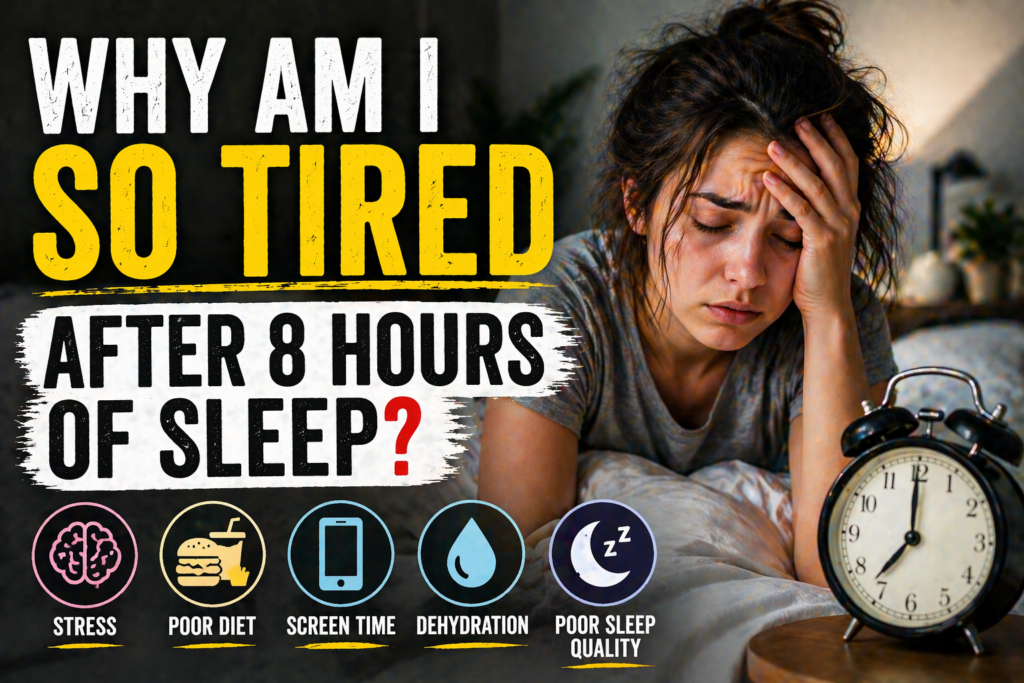
If you’re waking up exhausted on top of experiencing paralysis, the two problems often share the same root cause. The full breakdown of why sleep isn’t restoring you is worth reading alongside this one — the fixes overlap considerably.

And if you’re working through broader sleep issues beyond just paralysis, here’s a complete overview of what actually helps for people who’ve tried everything.
Frequently Asked Questions
Is sleep paralysis a sign of a serious medical condition?
In most cases, no. Isolated or infrequent sleep paralysis is a normal variant of the sleep-wake transition. Recurring episodes paired with excessive daytime sleepiness or sudden muscle weakness can indicate narcolepsy, which warrants medical evaluation.
Can sleep paralysis hurt you?
No. Despite how it feels, your breathing is not actually blocked and there is no physical danger. The experience is distressing but not physiologically harmful.
Why do I see things during sleep paralysis?
Your brain is still partially in REM mode — the dream-generating state — while your conscious mind is awake. Dream imagery bleeds into conscious perception, producing hallucinations. The threatening nature of many visions is driven by amygdala activation interpreting the unusual paralyzed state as a threat.
Does sleeping on your back cause sleep paralysis?
It doesn’t cause it, but it significantly increases the likelihood of an episode. Multiple studies show supine sleeping is strongly associated with sleep paralysis occurrence. Switching to side sleeping is one of the most effective preventive strategies.
How long does a sleep paralysis episode last?
Most episodes last between 20 seconds and 2 minutes, though they can feel much longer in the moment. Episodes lasting more than a few minutes are rare. They end on their own as the brain fully transitions to wakefulness.
Can children experience sleep paralysis?
Yes. Sleep paralysis can occur at any age. Children who experience it may be especially frightened since they have no framework for understanding what’s happening. Explaining the physiological cause in age-appropriate terms — that the brain and body briefly got out of sync — can significantly reduce the fear around it.
About the Author: Marcus J. Webb
Marcus has spent years studying sleep disorders and the neuroscience behind what happens in the brain during the sleep-wake transition. After his own experiences with sleep paralysis in his twenties, he became fascinated by the gap between how terrifying the experience feels and how well-understood it actually is from a neurological perspective. He covers sleep science, disorders, and practical sleep improvement strategies.
As an Amazon Associate we earn from qualifying purchases through some links in our articles.