Getting 8 hours but still waking up exhausted? Here are the real reasons your sleep isn’t restoring you — and what to do about each one.
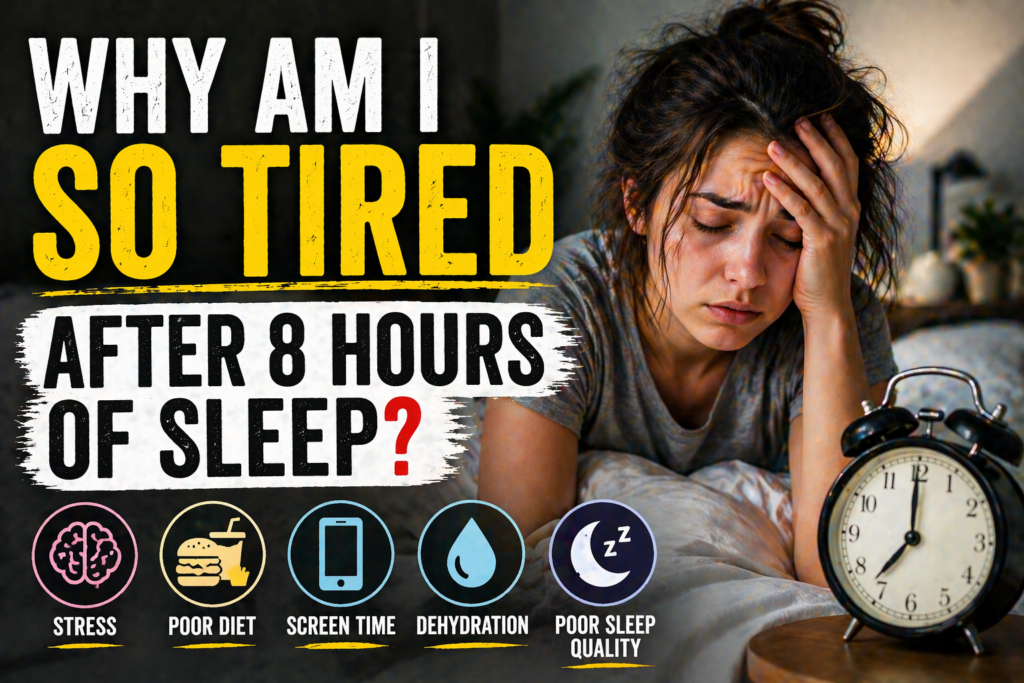
You Slept 8 Hours. You Still Feel Terrible. You’re Not Imagining It.
You did everything right. You went to bed at a decent hour, you got your 8 hours, and yet when the alarm goes off you feel like you haven’t slept at all. Your body is heavy, your brain is foggy, and the idea of facing the day feels genuinely overwhelming.
This isn’t laziness. It’s not in your head. And it doesn’t mean you just need more sleep.
The real problem is sleep quality — not sleep quantity. Eight hours of disrupted, shallow, or fragmented sleep does almost nothing for your body. And there are a surprising number of things that can quietly sabotage your sleep without you ever fully waking up.
Here’s what’s most likely going on — and what to actually do about it.


1. Your Sleep Cycles Are Getting Disrupted
Sleep isn’t just one long unconscious stretch. Your body moves through 90-minute cycles all night, cycling between light sleep, deep sleep, and REM sleep. Each phase does something different — deep sleep repairs your body, REM sleep consolidates memory and regulates mood.
If something is interrupting those cycles — noise, temperature changes, a bed partner moving, your own body waking itself up — you never get the full restorative benefit. You can technically log 8 hours and barely touch deep sleep at all.
Most people don’t even know it’s happening because the interruptions are brief. You rouse slightly, never fully wake, and have no memory of it in the morning. But your body paid the price.

What to do: Focus on improving sleep hygiene to protect your cycles — consistent bedtime, cool room, dark environment. Small changes compound fast.
2. Your Room Is Too Warm
This one surprises people. Temperature is one of the most powerful drivers of sleep quality, and most bedrooms are simply too warm for optimal deep sleep.

Your core body temperature needs to drop 1–2 degrees to enter and maintain deep sleep. If your room is warm, your body can’t make that shift efficiently. You spend the night in lighter sleep stages without ever fully bottoming out into the restorative deep sleep your body needs. For a deeper look at how room temperature supports this natural cooling process, see Can’t Sleep? Read this!.

What to do: The ideal sleep temperature is between 60–68°F. If you’re consistently sleeping warm, that alone could explain your morning exhaustion. A programmable thermostat that drops overnight is one of the highest-ROI sleep upgrades you can make.
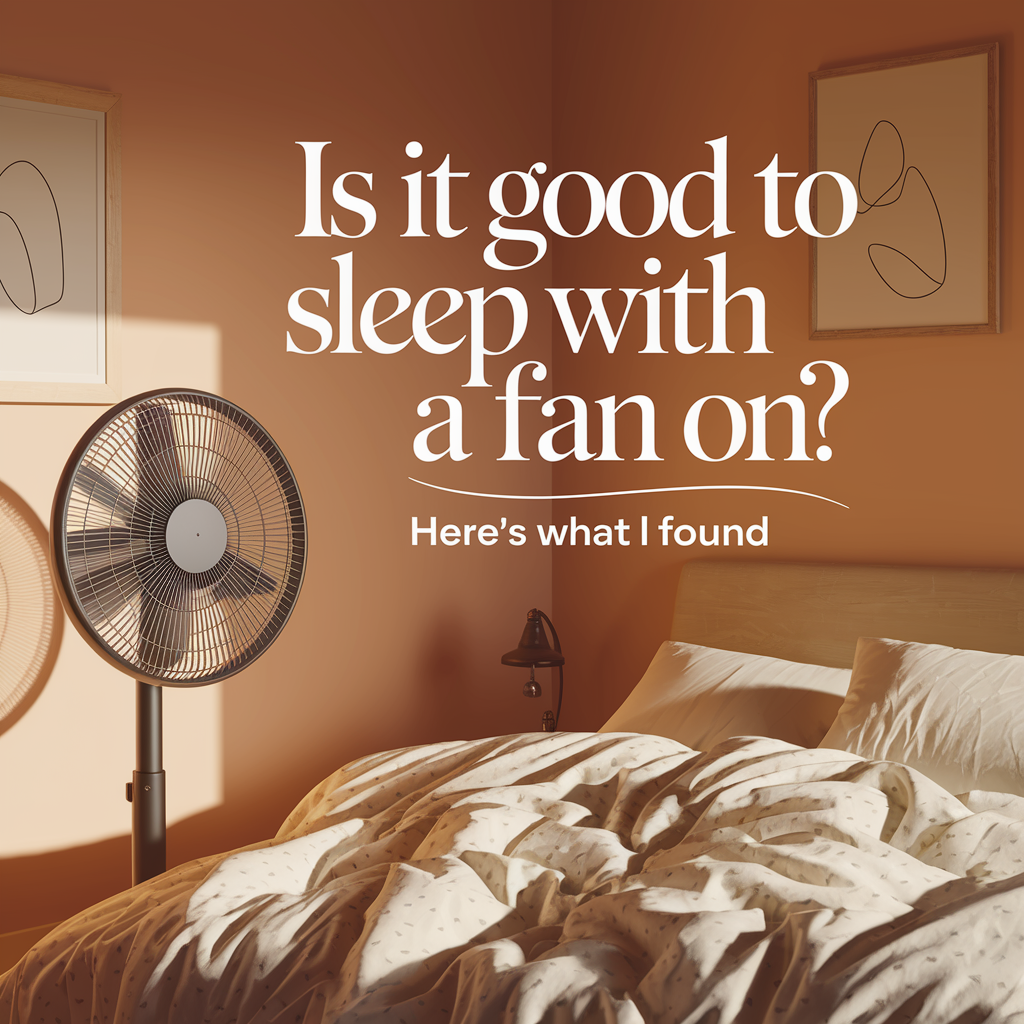
Even running a fan at night can make a measurable difference — both for temperature and for the white noise effect that protects your sleep cycles.
3. You Have Undiagnosed Sleep Apnea

This is one of the most common and most underdiagnosed causes of waking up exhausted after a full night. Sleep apnea causes your airway to partially or fully collapse repeatedly during sleep — sometimes hundreds of times a night — each time jolting you out of deep sleep just enough to reopen the airway. When those breathing disruptions are severe enough to wake you gasping, Why Do I Wake Up Gasping for Air? Causes and When to Worry outlines the signs and next steps to consider.
You never fully wake up. You have no idea it’s happening. But your brain is getting robbed of oxygen all night and your sleep cycles are shattered.
Classic signs beyond daytime fatigue: loud snoring, waking with a dry mouth, morning headaches, waking up gasping, or a partner telling you that you stop breathing in your sleep.

What to do: Talk to your doctor. A sleep study can diagnose it definitively. In the meantime, sleeping on your side instead of your back reduces apnea events naturally. Sleep apnea isn’t just a sleep problem — untreated, it carries serious long-term health risks.



4. Your Cortisol Is Off
Cortisol — your body’s primary stress hormone — follows a daily rhythm. It should be lowest at night (letting you sleep deeply) and peak in the morning (helping you wake up feeling alert). When that rhythm gets disrupted, the whole system breaks down.
High cortisol at night keeps you in lighter sleep stages. Low cortisol in the morning means you wake up feeling like you’re running on empty even after hours of sleep. Chronic stress, irregular schedules, and overtraining all throw this rhythm off.
What to do: Read more about how cortisol affects your sleep and what to do about it. Evening wind-down routines — dimming lights, avoiding screens, keeping a consistent bedtime — all help reset cortisol rhythm over time.
5. You’re Waking Up at the Wrong Part of Your Sleep Cycle
Timing matters enormously. Waking up in the middle of deep sleep feels terrible — you’re groggy, disoriented, and exhausted even if you’ve had plenty of hours. This is called sleep inertia, and it can last 30–60 minutes or longer.
If your alarm consistently goes off mid-cycle, you’ll feel wrecked every morning regardless of how long you slept. The total hours look fine on paper but your body is being yanked out of restoration too early.
What to do: Try adjusting your alarm by 15–30 minutes in either direction. Sleep cycles run about 90 minutes, so aim to wake at the end of a cycle rather than the middle of one. Some sleep tracking apps and wearables will also detect lighter sleep phases and wake you at the optimal moment within a window you set.
6. You’re Dealing With Hidden Anxiety or Stress
Even when you fall asleep without trouble, anxiety can keep your nervous system running at low-level activation all night. Your brain stays partially alert — monitoring for threats, processing worry — which means you never fully enter the deep, restful phases of sleep.
You can sleep 8 hours in a state of low-grade nervous system arousal and wake up feeling like you’ve been working all night. Because in a sense, you have.

What to do: If anxiety is affecting your sleep, addressing it directly matters more than any sleep hack. Journaling before bed, a consistent wind-down routine, and managing daytime stress all reduce the nervous system load you’re carrying into sleep.
7. Your Bedroom Environment Is Working Against You
Light, noise, and humidity are all quiet sleep disruptors that most people underestimate.
Even small amounts of light — a streetlight through thin curtains, a charging indicator, a TV on standby — suppress melatonin and shift you toward lighter sleep. Intermittent noise (a neighbor, traffic, a partner snoring) fragments your cycles without waking you. And a bedroom that’s too humid makes sleep feel physically uncomfortable, keeping your body slightly aroused all night.
What to do: Blackout curtains are one of the cheapest and most effective sleep upgrades you can make. If noise is an issue, a fan or white noise creates a consistent sound blanket that masks disruptions. If your room feels muggy, a bedroom dehumidifier can make a surprisingly big difference in how rested you feel.

Also worth checking: sleeping with the TV on is one of the most common ways people unknowingly fragment their sleep all night.
8. You Have a Nutritional Deficiency
Several nutrient deficiencies directly impair sleep quality — and because symptoms develop slowly, most people never connect the dots.
Magnesium is the big one. It regulates GABA receptors in the brain — the neurotransmitter responsible for calming neural activity and allowing deep sleep. Low magnesium means your brain stays more activated at night even when you’re technically asleep. Studies suggest a significant percentage of adults are deficient without knowing it.
Iron deficiency is another major factor, especially linked to restless leg syndrome — that uncomfortable urge to move your legs at night that fragments sleep without you realizing why you’re waking up tired.
Vitamin D deficiency is also strongly associated with disrupted sleep architecture and excessive daytime fatigue.
What to do: Get a basic blood panel if you’ve been chronically exhausted despite adequate sleep. Magnesium glycinate taken before bed is one of the most commonly recommended, well-tolerated supplements for sleep quality improvement.
9. You’re Sleeping With Too Many Disruptions You’re Not Tracking
A snoring partner. A pet jumping on the bed. Night sweats. Needing to use the bathroom. Light sleeper tendencies that wake you at the slightest sound.

Every micro-awakening costs you. If you’re a light sleeper, your 8 hours might actually contain 15–20 brief awakenings that never make it to conscious memory but completely destroy your sleep architecture.
What to do: A basic sleep tracker worn overnight can reveal just how fragmented your sleep actually is. Seeing the data is often the first step toward fixing it. Addressing temperature swings, noise, and light as a system rather than individually makes a bigger impact.
10. It Could Be an Underlying Health Condition
Persistent exhaustion despite adequate sleep is sometimes a symptom of something that needs medical attention — hypothyroidism, anemia, depression, chronic fatigue syndrome, or autoimmune conditions can all present this way.
If you’ve addressed your sleep environment, your stress levels, and your habits and still wake up consistently exhausted, it’s worth a conversation with your doctor. Especially if the fatigue is paired with other symptoms like brain fog, unexplained weight changes, or mood shifts.
The Bottom Line
Eight hours is not the finish line — it’s just the starting point. What matters is what’s happening inside those hours. Sleep quality, sleep cycles, your room environment, your stress load, and your body’s own physiology all determine whether you actually wake up restored.
Start with the most likely culprit based on your situation. Warm room? Fix the temperature. Snoring or gasping? Get screened for apnea. Stressed and anxious? That’s where to put your energy. Most people find one or two changes make a dramatic difference.
You’re not just supposed to survive on 8 hours of bad sleep. You’re supposed to feel good in the morning. That’s achievable — it just takes figuring out which piece of the puzzle is broken.

If you’re still not sure where to start, the full overview of what actually helps with sleep is a good place to get your bearings.
Frequently Asked Questions
Is it normal to still be tired after 8 hours of sleep?
It’s common but not normal — meaning it happens to a lot of people, but it does signal something worth addressing. The most frequent causes are poor sleep quality, sleep apnea, temperature issues, and stress-driven nervous system activation during sleep.
Can sleeping too much make you more tired?
Yes. Oversleeping — regularly getting 9–10+ hours — is associated with increased fatigue, not less. It can disrupt your circadian rhythm and is sometimes a symptom of depression or other underlying conditions rather than a fix for tiredness.
What’s the difference between sleep quantity and sleep quality?
Quantity is total hours. Quality is how much time you spend in restorative sleep stages — particularly deep sleep and REM. You can have high quantity and poor quality, which is exactly the scenario that leaves you exhausted after a full night.
How do I know if I have sleep apnea?
Classic signs are waking up exhausted despite adequate hours, loud snoring, morning headaches, waking with a dry mouth, and daytime brain fog. A sleep study confirms the diagnosis. It’s more common than most people realize and very treatable.
What supplements help with sleep quality?
Magnesium glycinate is the most evidence-backed for sleep quality. Others commonly used include L-theanine, ashwagandha for stress-related sleep disruption, and melatonin for circadian rhythm issues. Always check with your doctor before starting supplements, especially if you’re on medications.
Author: Dana Holloway
As an Amazon Associate we earn from qualifying purchases through some links in our articles.